
Travis County, TX — August 31, 2025, Erik Billingsley lost his life due to a motorcycle versus car accident just before 1:00 a.m. along U.S. Highway 183.
According to authorities, 22-year-old Erik Billingsley was traveling on a southbound Kawasaki motorcycle at the McNeil Drive and U.S. 183 frontage road intersection when the accident occurred.
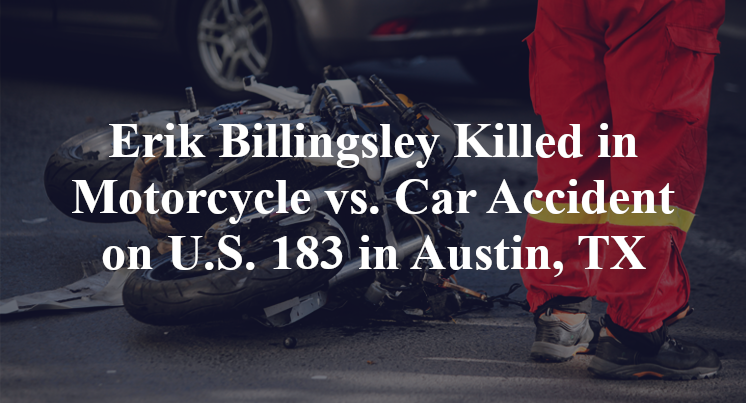
Officials indicate that, for reasons yet to be confirmed, the motorcycle entered the intersection at an apparently unsafe time, allegedly failing to heed the traffic signal. A collision consequently took place between the motorcycle and a northwest bound GMC Sierra pickup truck.
Billingsley reportedly suffered critical injuries as a result of the wreck. He was transported to a local medical facility by EMS in order to receive necessary treatment. However, he was ultimately unable to overcome the severity of his injuries, having there been declared deceased.
Additional details pertaining to this incident are not available at this point in time. The investigation is currently ongoing.
Commentary by Attorney Michael Grossman
Collisions between motorcycles and larger vehicles are nearly always devastating, and when they happen at intersections controlled by traffic lights, it’s tempting to stop at the surface explanation: one driver ran the light. But when a young man loses his life, it’s critical to look deeper into whether the investigation is capturing the full story.
1. Did the authorities thoroughly investigate the crash?
A motorcycle-versus-pickup collision at an intersection requires far more than a simple traffic citation. Did investigators reconstruct the speeds of both vehicles, document the timing of the signal, and check for braking or evasive maneuvers? Was the scene laser-mapped to preserve the exact positions? Without that level of detail, it’s easy to assume fault without truly understanding whether the rider had the ability—or even the opportunity—to react before impact.
2. Has anyone looked into the possibility that a vehicle defect caused the crash?
On the motorcycle side, brake or suspension problems could limit stopping power or stability. With modern bikes like a Kawasaki, electronic systems such as ABS can malfunction, leaving the rider unable to control the bike as expected. On the pickup’s side, mechanical issues like faulty headlights or signal lights could reduce visibility to others in the intersection. Unless both vehicles were examined closely, it’s impossible to rule out whether equipment failure factored into the collision.
3. Has all the electronic data relating to the crash been collected?
While motorcycles generally store less data than cars, some models still log useful information about speed and braking. The GMC Sierra almost certainly has an event data recorder that can confirm whether the truck braked, accelerated, or swerved before the impact. Phone records, GPS data, and traffic camera footage at the intersection could also provide crucial details about timing and driver behavior. Without pulling this digital evidence, the investigation risks relying too heavily on assumptions.
When a life is cut short in a crash, the easy explanation rarely tells the whole story. The harder questions—about investigation quality, vehicle performance, and electronic evidence—are the ones that can bring clarity, accountability, and, ultimately, truth.
Key Takeaways:
- Fatal motorcycle-versus-car crashes require precise reconstruction, not just a simple report of “ran a light.”
- Mechanical or electronic issues in either vehicle may have contributed to the collision.
- Black box data, phone records, and traffic cameras are essential tools for uncovering what really happened.

 call us
  Email Us
  Text us