
Rawlins, WY — September 7, 2024, one person was killed following a two-truck accident at approximately 9:30 a.m. along Interstate Highway 80.
According to authorities, the accident took place in the eastbound lanes of I.H. 80 in the vicinity east of S.H. 76.
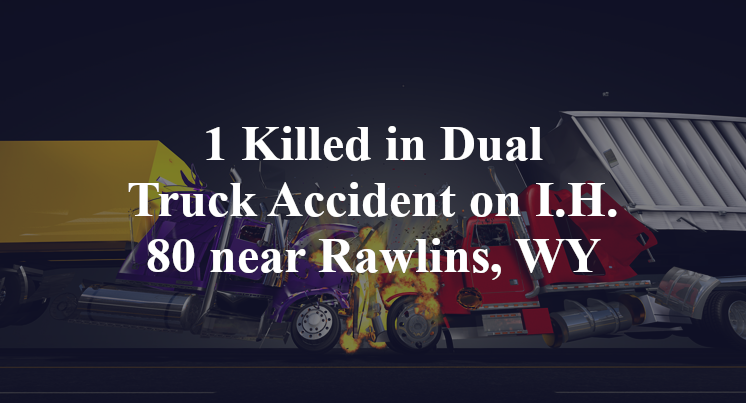
The cause of the accident remains unclear. Officials indicate that, for as yet unknown reasons, two 18-wheelers were involved in a collision. One of the trucks reportedly became engulfed in flames as a result of the crash. One person suffered fatal injuries due to the wreck, according to reports. Additional details pertaining to this incident—including the identity of the victim—are not available at this point in time. The investigation is currently ongoing.
Commentary by Attorney Michael Grossman
When accidents like this happen, it’s easy for people to assume they’re the result of bad timing or a momentary error. However, based on my experience, incidents involving large trucks often involve multiple layers of complexity that need thorough investigation. This crash is no exception.
At this point, we don’t know the full details of what caused the collision or why one of the trucks became engulfed in flames. But when fires are involved, questions about the design and condition of the vehicles come into play. Many large trucks have exposed fuel tanks that, when damaged in a crash, can turn an already dangerous situation into a deadly one. Unfortunately, these factors are often overlooked unless investigators know exactly what to look for.
Beyond the mechanical issues, there’s the human element to consider. Was one of the drivers distracted? Was there a mechanical failure that contributed to the crash? Thoroughly answering these questions is essential to understanding what happened and determining whether something could have been done to prevent it. In cases like this, a proper investigation goes well beyond the crash scene, looking into all aspects of the drivers’ training, vehicle maintenance, and company policies.
Another important aspect to consider is the role of the trucking companies involved. It’s possible that poor company practices, such as inadequate vehicle maintenance, lack of proper driver training, or unrealistic delivery schedules, may have contributed to the collision. Trucking companies have a legal responsibility to ensure that their vehicles are roadworthy and that their drivers are adequately prepared to handle the demands of the job. If either company failed to meet these obligations, they could share responsibility for the crash, making it essential that investigators closely examine their policies and procedures to determine whether company negligence played a part in this fatal event.
Ultimately, the goal is to uncover the truth and provide answers to those affected by the crash. Even if it requires conducting an independent investigation to obtain vital evidence, it is crucial to consider every factor to ensure that those impacted by the crash receive the clarity and closure they deserve.

 call us
  Email Us
  Text us