
Craig County, OK — March 16, 2024, Arthur Fair was killed in a truck accident at about 11:30 p.m. on westbound Interstate 44/Will Rogers Turnpike.
Authorities said a 2018 Volvo semi-truck stopped on the interstate near mile marker 285 for an unknown reason when it was hit from behind by a 2020 Freightliner semi-truck. The Freightliner caught fire after the collision.
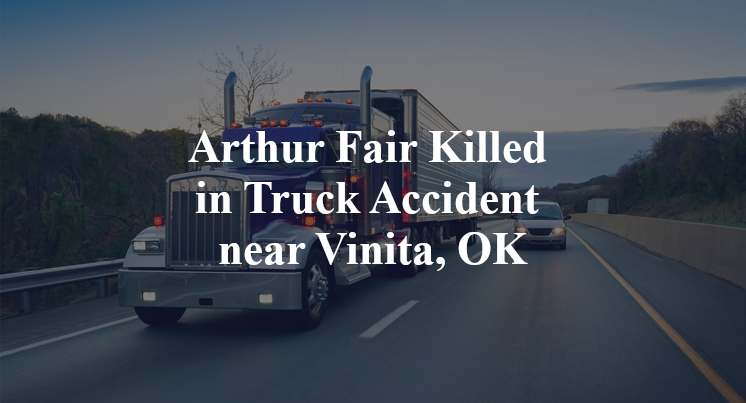
Freightliner driver Arthur M. Fair, 40, was pronounced dead at the scene of the crash west of Vinita, according to authorities.
Volvo driver Mihaela Chihai, 29, was treated at a Tulsa hospital and released after the crash, while passenger Vasile Onofrei, 29, declined medical treatment, authorities said.
Authorities have not released any additional information about the Craig County crash.
Commentary by Attorney Michael Grossman
When a semi-truck is stopped in the travel lanes of an interstate at night and another truck crashes into it from behind, it raises immediate and serious questions about why that truck was stopped and whether either driver had an opportunity to prevent the collision. According to reports, a Volvo semi-truck was stopped on I-44 near mile marker 285 when it was hit by another semi, causing the second truck to catch fire and killing its driver.
At 11:30 p.m., visibility is limited, reaction time is compressed and drivers rely heavily on functioning lights, reflective tape and hazard signals to detect and respond to stopped vehicles. A commercial truck stopped in the roadway without warning — or even stopped legally but without proper precautions — creates a high-risk situation for everyone on the road, particularly for other truck drivers who may be approaching at full highway speed.
The first legal question is why the Volvo truck was stopped in the travel lane. Was there a mechanical failure, or did the driver stop voluntarily for another reason? If it was a breakdown, did the driver activate hazard lights, set out warning triangles or attempt to move the vehicle off the roadway? These safety measures aren’t optional. They’re required under federal regulations, and they exist for exactly this reason: to prevent fatal rear-end crashes in low-visibility conditions.
It’s also worth considering the fire that followed the crash. Fires in truck collisions aren’t uncommon, but they often point to vulnerabilities in fuel system placement or a particularly high-energy impact. If the truck’s design contributed to the severity of the outcome, that’s a factor that could come into play in any legal or regulatory review.
Ultimately, a crash like this illustrates the extreme danger posed when even a single vehicle becomes disabled — or simply stops — in a high-speed corridor like the Will Rogers Turnpike. The law requires commercial drivers to anticipate hazards, but it also expects that when a truck is stopped in a live lane, every possible step is taken to protect approaching drivers.
A man lost his life in this crash. The investigation should focus not just on which truck struck the other, but on whether this collision could, and should, have been avoided if proper precautions had been in place. Because in situations like this, “unknown reasons” aren’t enough. Accountability requires answers.

 call us
  Email Us
  Text us