
Camp Swift, TX — March 16, 2025, Anthony Desimone was killed following a motorcycle accident at approximately 5:00 a.m. along Farm to Market 1441.
According to authorities, 38-year-old Anthony Desimone was traveling on a westbound Harley-Davidson motorcycle on F.M. 1441 in the vicinity of the Faldyn Street intersection when the accident took place.
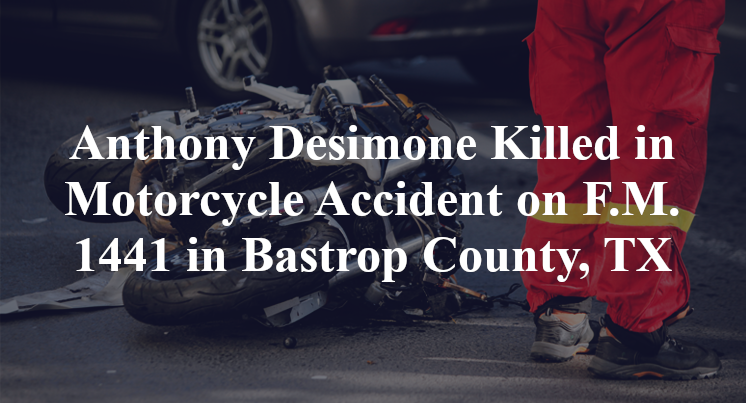
The cause of the accident remains unclear. Officials indicate that, for reasons yet to be confirmed, the motorcycle failed to safely maintain its lane of travel. It was consequently involved in a single-vehicle collision. Desimone reportedly suffered fatal injuries over the course of the accident. Additional details pertaining to this incident are not available at this point in time. The investigation is currently ongoing.
Commentary by Attorney Michael Grossman
When a motorcyclist loses their life in a single-vehicle crash and the cause remains unknown, especially in the early morning hours, many are quick to conclude it was simply a matter of rider error. But in my experience, those assumptions often overlook key factors that could have made all the difference. To truly understand what happened on Farm to Market 1441, there are three important questions that should be asked.
First, did the authorities conduct a thorough investigation? A crash around 5:00 a.m. likely occurred under low-light conditions, and rural roads may lack adequate lighting or clear lane markings. Investigators should have examined the road’s condition, visibility around the Faldyn Street intersection, and any possible obstructions or hazards. Did the rider encounter debris? Was there a sudden curve or narrowing in the roadway? If these details weren’t fully documented at the scene, an independent reconstruction may be necessary to ensure nothing was missed.
Second, has anyone looked into whether a mechanical issue or vehicle defect contributed to the crash? If the motorcycle failed to stay within its lane, it’s fair to ask whether something prevented the rider from maintaining control. Possible issues include brake failure, a stuck throttle, or problems with the steering or suspension—particularly on a motorcycle, where any mechanical failure can be unforgiving. These kinds of defects are rarely visible in a cursory inspection and require a forensic examination, which can only be performed if the vehicle is preserved in its post-crash condition.
Lastly, has any electronic or supplementary data been collected? While many motorcycles don’t include event data recorders, some modern or high-performance models may log performance information. In addition, phone records, GPS data, or surveillance footage from nearby homes or businesses may help clarify what happened in the final moments before the crash. As with any form of evidence, time is of the essence when securing this kind of data.
In a case where a rider has died and the cause of the crash remains unclear, surface-level explanations do little to help those left behind. Asking these questions is the least that can be done to ensure that those affected by this crash get the clarity and closure they deserve.

 call us
  Email Us
  Text us