
Malvern, AR — May 16, 2025, One person was killed following a car accident that occurred at around 7:00 A.M. on Arkansas Highway 9.
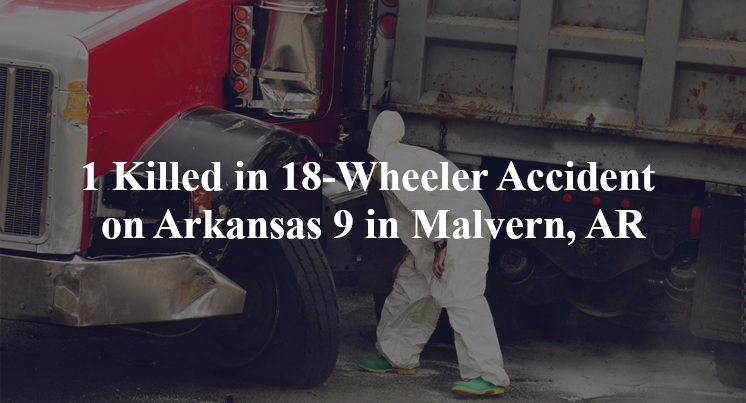
An investigation is underway into a car accident that left one person dead during the morning hours of May 16th. According to official reports, an 18-wheeler was traveling on Arkansas Highway 9 when for unknown reasons the truck struck a culvert causing it to become airborne, striking several trees before landing and catching fire.
When first responders arrived on the scene, they found that the driver had sustained fatal injuries and they were pronounced deceased. At this time there has been no further information released about the accident, including the identity of the driver, however this remains an ongoing investigation and more details may be released by authorities in the future.
Commentary by Attorney Michael Grossman
When people hear about a crash like this—where an 18-wheeler strikes a culvert, becomes airborne, hits trees, and bursts into flames—the natural reaction is to wonder: How does something that extreme even happen? Was the driver speeding? Did the truck malfunction? Was something wrong with the road itself? Unfortunately, the initial reports don’t answer any of those questions. But that’s exactly where a serious investigation should begin.
Right now, there’s a wide range of unknowns. We don’t yet know whether the driver veered off the road before hitting the culvert or if the culvert was close enough to the travel lane to pose a hazard during normal operation. That distinction matters. If the truck left the roadway, we need to know why. If it didn’t, we need to ask whether the road was poorly designed or maintained. Each possibility points to a different kind of responsibility.
To start uncovering the truth, investigators need to secure key pieces of evidence. The truck’s engine control module (ECM)—essentially its black box—can show speed, braking, throttle position, and steering inputs in the moments leading up to the crash. If there were dash cameras or in-cab video systems, they could provide visual confirmation of what the driver was seeing and doing. Cell phone records might tell us whether the driver was distracted. And depending on the damage, post-crash inspection could determine whether a mechanical failure played a role.
But the investigation can’t stop with the vehicle and driver. The trucking company’s role also deserves scrutiny. Was this a qualified driver? Were they well-rested and within their legal driving hours? Were they operating under a safe and reasonable delivery schedule? I’ve worked on cases where it turned out the trucking company failed at every level—hiring drivers with poor safety histories, providing little to no training, and pushing them to meet unrealistic deadlines. That kind of systemic failure doesn’t just happen overnight—it’s baked into company culture. Whether that’s a factor here remains to be seen.
It’s also worth noting that crashes involving fire often destroy important evidence. That makes it all the more important to gather what remains quickly—from ECM data backups to witness statements to any roadside surveillance footage. Time is critical in piecing together what really happened.
Key Takeaways:
- The cause of the truck striking a culvert and going airborne is currently unknown, leaving several key questions unanswered.
- Black box data, dash cams, and cell phone records are crucial to determining the driver’s actions and the truck’s condition before the crash.
- The roadway design and maintenance could be relevant if the culvert posed an unreasonable hazard to normal traffic.
- The trucking company’s hiring, training, and scheduling practices may also be contributing factors depending on what further evidence shows.
- Fires in truck crashes can destroy vital evidence—making early and thorough investigation essential to uncover the truth.

 call us
  Email Us
  Text us