
Chicago, IL — June 25, 2025, One person was killed following an 18-wheeler accident that occurred Wednesday evening on Kennedy Expressway.
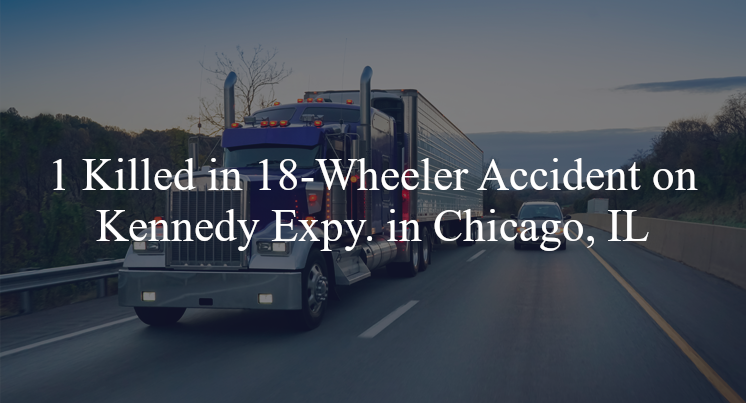
According to reports, an 18-wheeler hauling meat was traveling south on the Kennedy Expressway near Belmont Avenue, when for unknown reasons the semi lost control and overturned.
When first responders arrived on the scene they found the driver in critical condition and transported them to the hospital where they later succumbed to their injuries. The identity of the driver has not been released, and officials continue to investigate the accident.
Commentary by Attorney Michael Grossman
When an 18-wheeler hauling meat overturns on a busy highway like the Kennedy Expressway, the question everyone wants answered is: how did the driver lose control? According to reports, the crash happened near Belmont Avenue, and while the driver was transported to the hospital in critical condition, they later died from their injuries. Authorities have not yet released the driver’s identity or the cause of the crash.
Overturns Point to a Sudden Loss of Stability
An 18-wheeler doesn’t just roll over without warning. Whether it’s a matter of excessive speed, a mechanical failure, a shifting load, or evasive steering, something caused the truck to become unstable. Determining what happened starts with black box data, which can show whether the driver was braking, accelerating, or making sudden steering adjustments in the moments before the crash.
Investigators should also be looking at the truck’s speed relative to the road conditions. The Kennedy Expressway is a high-traffic corridor, and navigating it in a fully loaded semi requires constant attention. A momentary distraction or overcorrection can be enough to tip a heavy vehicle—especially one hauling temperature-sensitive cargo like meat.
Cargo Load and Trailer Balance Could Be a Factor
Meat haulers typically use refrigerated trailers, and the weight of the cargo inside can be substantial. If the load wasn’t balanced correctly or wasn’t secured to prevent shifting, that could have played a role in the truck’s instability. In a rollover, even a minor imbalance becomes a major liability, particularly during lane changes, curves, or abrupt maneuvers.
I’ve handled cases where a trailer was loaded improperly—sometimes by a third-party shipper—and that misstep ended up being the root cause of the crash. Just because the truck tipped over doesn’t mean the driver was entirely at fault. The investigation needs to include a review of how the cargo was loaded, who oversaw the process, and whether the trailer was appropriate for the type and weight of freight being carried.
Mechanical and Maintenance Issues Must Be Ruled Out
Mechanical failure is another possible factor—one that deserves close scrutiny. Braking systems, suspension, and steering components must all be examined to determine whether something failed at a critical moment. That includes reviewing the company’s maintenance logs and repair history. If this crash was the result of overlooked issues or skipped inspections, the responsibility could extend beyond the cab.
Key Takeaways
- The 18-wheeler reportedly lost control and overturned, but the cause of the crash has not been determined.
- Black box data and driver input leading up to the crash will be central to understanding what went wrong.
- Improperly loaded or shifting cargo may have contributed to the loss of stability.
- Mechanical issues, if present, could point to problems with maintenance or inspection procedures.
- A thorough investigation is needed to determine whether this was a preventable crash and where accountability may lie.

 call us
  Email Us
  Text us