
El Paso, TX — August 12, 2025, Jason Vargas Jr. lost his life due to a motorcycle versus car accident at approximately 3:00 a.m. along Alameda Avenue.
According to authorities, 26-year-old Jason Vargas Jr. was traveling on an eastbound Honda motorcycle on Alameda Avenue at the Delta Drive intersection when the accident took place.
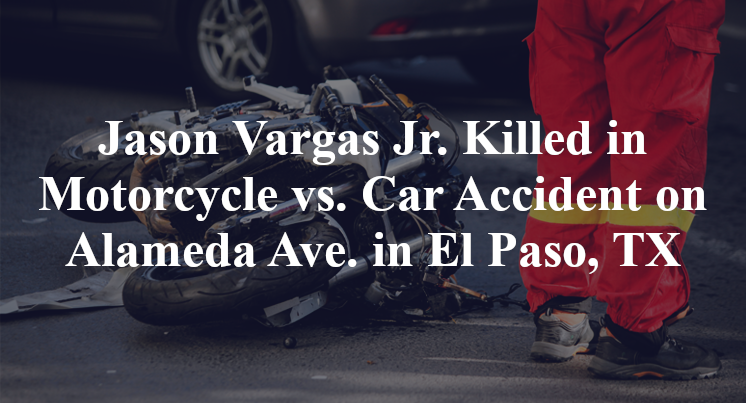
Officials indicate that, for as yet unknown reasons, the motorcycle failed to heed the red light indicated by the traffic signal. A collision consequently occurred between the motorcycle and a westbound Volkswagen Passat that had been making a left turn from Alameda onto Delta. Vargas reportedly sustained fatal injuries over the course of the accident and was declared deceased at the scene. Additional details pertaining to this incident are not available at this point in time. The investigation is currently ongoing.
Commentary by Attorney Michael Grossman
When a rider is killed in a collision with another vehicle, the official account often zeroes in on a single moment—like a red light violation. But those moments rarely exist in isolation, and the real picture can be far more complex.
Did the authorities thoroughly investigate the crash?
If the report says the motorcycle ran a red light, the question becomes: how certain is that? Did investigators review traffic signal timing and analyze the approach speeds of both vehicles? Were skid marks, impact angles, and debris patterns documented to reconstruct the sequence of events? Motorcycle crashes can be difficult to read at a glance, and without a careful scene analysis, key details might be missed.
Has anyone looked into the possibility that a vehicle defect caused the crash?
Motorcycles depend heavily on precise mechanical function, and any failure—brakes, throttle control, even a stuck clutch—can disrupt a rider’s ability to stop or maneuver. A sudden defect might make it look like a traffic signal was ignored when, in reality, the rider was unable to slow down. Unless the bike was inspected quickly by someone who knows what to look for, that possibility may never be explored.
Has all the electronic data relating to the crash been collected?
While motorcycles have less built-in data recording than cars, some models still store speed, throttle, and brake usage. Paired with traffic camera footage, nearby surveillance, and possibly phone or GPS records, these sources can help determine whether the rider tried to brake or swerve before impact. That kind of evidence is often fleeting and can vanish if not preserved immediately.
Focusing only on the final seconds before a crash risks missing the conditions that truly caused it. A thorough investigation means tracing the story all the way back to its first chapter, not just its ending.
Takeaways:
- Intersection crashes need full scene reconstruction to verify timing and driver actions.
- Mechanical failures on a motorcycle can make it impossible to avoid a collision.
- Traffic camera, GPS, and onboard performance data can be crucial to understanding the moments before impact.

 call us
  Email Us
  Text us