
Pulaski County, KY — August, 8, 2025, Zane Rexroth lost his life due to a truck accident sometime in the overnight hours along State Highway 461.
According to authorities, 24-year-old Zane Rexroth was traveling in a pickup truck in the vicinity of the S.H. 461 and Babe Boulevard intersection when the accident took place.
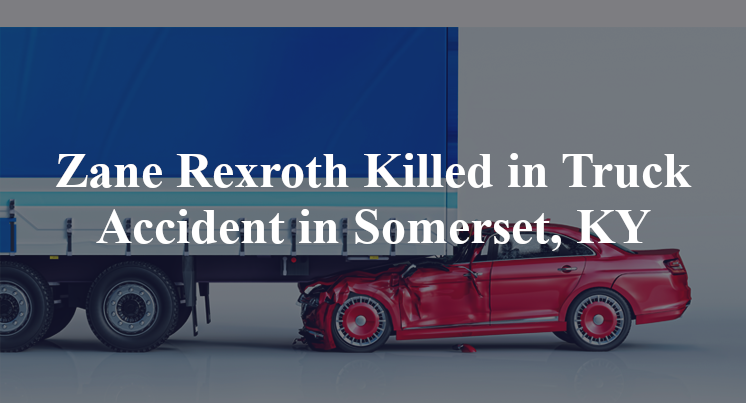
Details surrounding the accident remain scarce. Preliminary reports state that, for as yet unknown reasons, a collision took place between the front-end of the pickup truck and the rear-end of a trailer that was being towed by an 18-wheeler.
Rexroth reportedly suffered fatal injuries over the course of the accident and was declared deceased at the scene. Additional information pertaining to this incident is not available at this point in time. The investigation is currently ongoing.
Commentary by Attorney Michael Grossman
When a pickup truck collides with the rear of an 18-wheeler’s trailer during overnight hours, visibility becomes one of the first and most important questions. At night, a trailer that isn’t properly lit or marked can be difficult to detect until it’s too late—especially if it’s moving slowly or stopped in the roadway.
Federal regulations require trailers to have working tail lights, brake lights, and reflective conspicuity tape to make them visible in low-light conditions. If any of those were missing, obscured, or not functioning, it could have made it nearly impossible for the pickup driver to recognize the hazard in time. In past cases I’ve handled, we’ve seen how a lack of functioning lights or faded reflective tape turned a lawful piece of equipment into a deadly obstacle.
It’s also worth examining the trailer’s position and movement. Was it in the travel lane or partially on the shoulder? Was it stopped, reversing, or moving at a reduced speed? Each of those scenarios changes the analysis and the potential share of liability. If the trailer was obstructing the lane without adequate warning, the trucking company could bear significant responsibility.
Evidence preservation is critical here. Photographs from the scene, dash cam footage, and an inspection of the trailer’s lighting and reflectors should happen immediately, before repairs or changes erase key details.
Key Takeaways:
- Nighttime collisions with trailers often involve questions of lighting, reflectivity, and visibility.
- Trailer placement and movement at the time of the crash will be central to the liability analysis.
- Federal regulations require functional lights and conspicuity tape—deficiencies can make the equipment dangerous.
- Past cases show that poor visibility can shift fault even in rear-end collisions.
- Rapid evidence collection is essential before the trailer is repaired or altered.

 call us
  Email Us
  Text us