
Winston-Salem, NC — May 8, 2025, Yi Won Yang was injured following a truck accident at approximately 7:15 p.m. along U.S. Highway 52.
According to authorities, Yi Won Yang was traveling in southbound Toyota Camry on U.S. Highway 52 in the vicinity of the U.S. Highway 421 interchange when the accident took place.
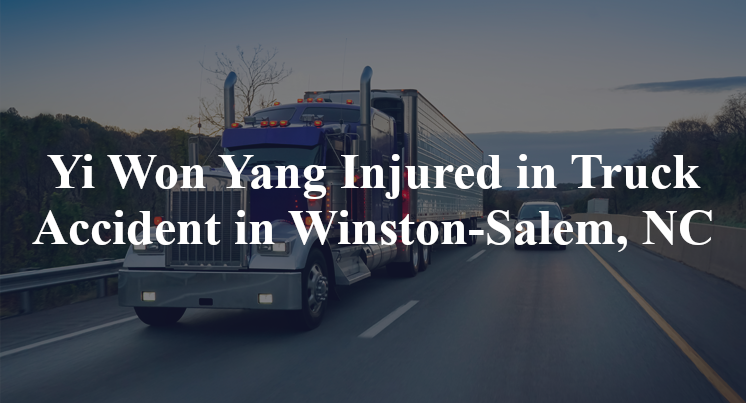
Officials indicate that, for as yet unknown reasons, a collision took place between the Camry and the trailer of a southbound 18-wheeler. The Camry reportedly became wedged beneath the trailer and was dragged along for a short time before the 18-wheeler came to a stop.
Yang sustained injuries of unknown severity due to the accident and was transported to a local medical facility by EMS in order to receive necessary treatment, according to reports. Additional details pertaining to this incident are not available at this point in time. The investigation is currently ongoing.
Commentary by Attorney Michael Grossman
When a passenger vehicle ends up wedged beneath the trailer of a moving 18-wheeler, it’s not just a sign of a severe crash—it’s a red flag that something went wrong with how that truck was operating. These kinds of collisions, often called underride crashes, are among the most dangerous types of truck-involved wrecks. From a legal standpoint, the key questions are whether the truck was being operated safely and whether the trailer was equipped with the safety features designed to prevent exactly this kind of outcome.
One of the first things investigators should determine is how the Toyota Camry came to be under the trailer. Was the truck changing lanes or merging when the car was already in the blind spot? Was traffic slowing down, and the truck driver didn’t check their mirrors before maneuvering? Or did the Camry lose control and slide under a trailer that was already there? These questions can’t be answered just by looking at vehicle positions after the fact—they require a detailed review of dash cam footage, witness statements, and forensic data from the truck’s onboard systems.
Another major issue is whether the trailer had proper underride protection. Federal law requires most trailers to have rear underride guards—sturdy barriers designed to stop a car from sliding underneath in a rear-end crash. But there’s a catch: there’s no equivalent requirement for side underride guards, even though side underride collisions can be just as deadly. If the car went under the side of the trailer, this raises serious questions about whether that trailer met basic safety expectations—even if it technically complied with the law.
And of course, the trucking company operating the 18-wheeler needs to be part of the investigation. Did they maintain the trailer in good condition? Was the driver trained to check blind spots thoroughly and change lanes safely? Was the route appropriate for the size and type of truck being used? I’ve seen cases where commercial drivers were under pressure to stay on schedule or cut corners, leading directly to decisions that put other road users in harm’s way.
Getting to the bottom of a crash like this means asking the right questions and refusing to stop at surface-level explanations. Serious wrecks deserve serious investigation, not assumptions. Understanding how the underride happened, whether the trailer had proper safety features, and whether the company and driver acted responsibly is key to figuring out what might have happened. Getting clear answers to these questions is the least that can be done to help those affected find the clarity and closure they deserve.

 call us
  Email Us
  Text us