
Hale County, TX — July 22, 2025, a motorcyclist was injured due to a car accident at approximately 9:15 p.m. along U.S. Highway 70 (W. 5th Street).
According to authorities, a 20-year-old man was traveling on a westbound Suzuki motorcycle on U.S. 70 just west of the Columbia Street intersection when the accident took place.
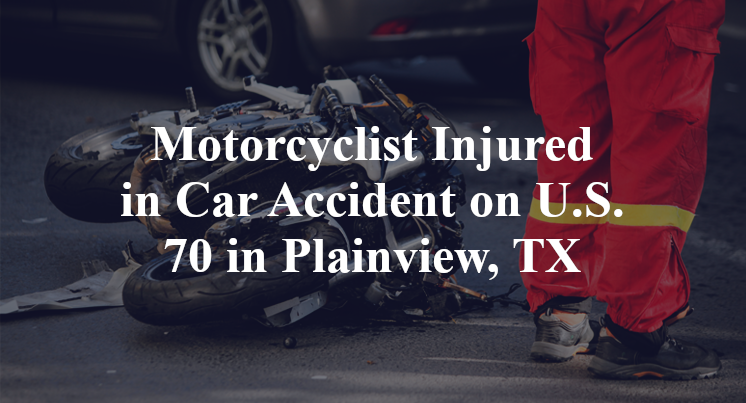
Officials indicate that, for as yet unknown reasons, an eastbound Ford F-250 pickup truck attempted a left turn into a private drive at an apparently unsafe time, failing to yield the right-of-way to oncoming traffic. A collision consequently occurred between the motorcycle and the front-left of the pickup truck.
The motorcyclist reportedly sustained serious injuries over the course of the accident. Additional details pertaining to this incident—including the identity of the victim—are not available at this point in time. The investigation is currently ongoing.
Commentary by Attorney Michael Grossman
When a vehicle turns across the path of a motorcycle, the consequences are often severe. It’s tempting to stop at “failure to yield,” but that explanation leaves out the critical details of why the crash happened—and whether something more contributed.
Did the authorities thoroughly investigate the crash?
A thorough investigation should look beyond the statement that the pickup “turned unsafely.” Did investigators determine how fast each vehicle was moving, whether the motorcycle attempted to brake or swerve, and if the Ford began its turn suddenly? Mapping both vehicles’ movements is essential in collisions like this. Without that reconstruction, the story risks being flattened into a single assumption rather than a complete account.
Has anyone looked into the possibility that a vehicle defect caused the crash?
Both vehicles deserve scrutiny. On the Suzuki, a brake imbalance, tire problem, or steering defect could have limited the rider’s ability to avoid impact. On the Ford F-250, issues with steering, brakes, or malfunctioning turn signals could have contributed to the unsafe turn. And while modern pickups are often equipped with collision-warning systems, they’re only helpful if they’re working properly. Without mechanical inspections, these possibilities remain open.
Has all the electronic data relating to the crash been collected?
The Ford F-250 almost certainly has an event data recorder that could reveal speed, brake use, and steering inputs at the moment of the crash. That information might confirm whether the driver slowed before the turn or cut across too quickly. The Suzuki may have limited logging capacity, but GPS data, phone records, or even nearby business cameras could help clarify the motorcyclist’s actions in the seconds before impact. If investigators didn’t pursue those sources, the picture of what happened may be incomplete.
Collisions between motorcycles and turning vehicles aren’t just about right-of-way—they’re about the decisions and circumstances leading up to the moment of impact. The only way to get answers is through deeper investigation, not assumptions.
Key Takeaways:
- Motorcycle-versus-turning vehicle crashes require full reconstruction of both drivers’ actions.
- Mechanical or signal failures on either vehicle should be considered.
- Event recorders, phones, and cameras may provide the missing context behind the collision.

 call us
  Email Us
  Text us