
Neoga, IL — May 16, 2025, two people were killed in a truck accident at about 11:20 a.m. on Interstate 57 near mile marker 177.
Authorities said a passenger vehicle was heading south when it collided head-on with a semi-truck near the junction of U.S. Route 45. The car caught fire after the crash.
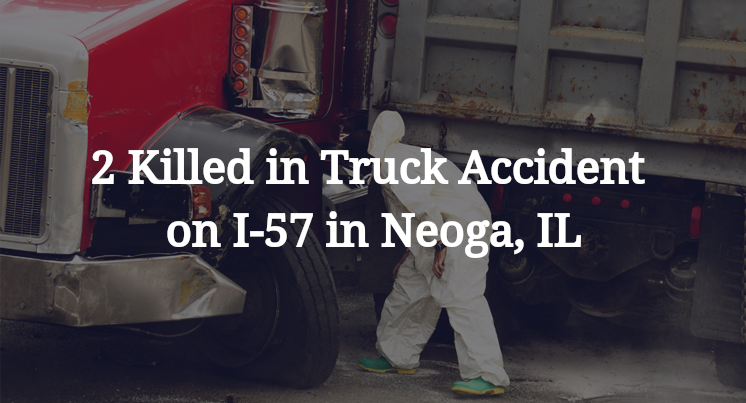
Two people died in the crash, according to authorities. Their names have not been made public at this time.
Authorities have not released any additional information about the Cumberland County crash at this time. The accident is still under investigation.
Commentary by Attorney Michael Grossman
When a head-on collision between a passenger vehicle and a semi-truck results in a vehicle fire and the deaths of both occupants, the public tends to assume it’s a tragic fluke. But from a legal and investigative standpoint, the most important question is how a head-on crash happened on a divided highway like Interstate 57 in the first place.
Under normal conditions, vehicles traveling in opposite directions on interstates are physically separated by medians, barriers or wide grassy dividers. That means head-on collisions are extremely rare, and when they do happen, something has usually gone very wrong. The responsibility could lie with a wrong-way driver, a median crossover or some other extraordinary breakdown in basic road safety.
From the available details, we don’t yet know which vehicle crossed the center or why. But whatever the cause, the semi-truck’s engine control module, dash camera footage and eyewitness accounts will be essential in reconstructing the sequence of events. Investigators should also consider whether road design, signage or temporary construction might have created confusion.
Equally concerning is the fire. A post-collision vehicle fire points to either extreme impact or a failure of the vehicle’s fuel system to contain flammable materials. Fires like these don’t just happen. They are either triggered by catastrophic force or made possible by design or maintenance failures. If the vehicle was structurally compromised in a way that allowed a fire to break out and trap the occupants, that raises separate questions about vehicle safety and crashworthiness.
For the families of those involved, getting answers requires more than just a state patrol report. It requires a thorough examination of what each driver was doing, whether their vehicles were safe and whether anything could have prevented the crash or its deadly aftermath. Because while the facts are still emerging, the nature of the crash demands a careful look at every possible contributing factor.
In cases like this, the question isn’t just what happened; it’s how was it allowed to happen on a roadway designed to prevent exactly this kind of collision? That’s the question investigators need to answer, and it’s the only path to meaningful accountability.

 call us
  Email Us
  Text us