
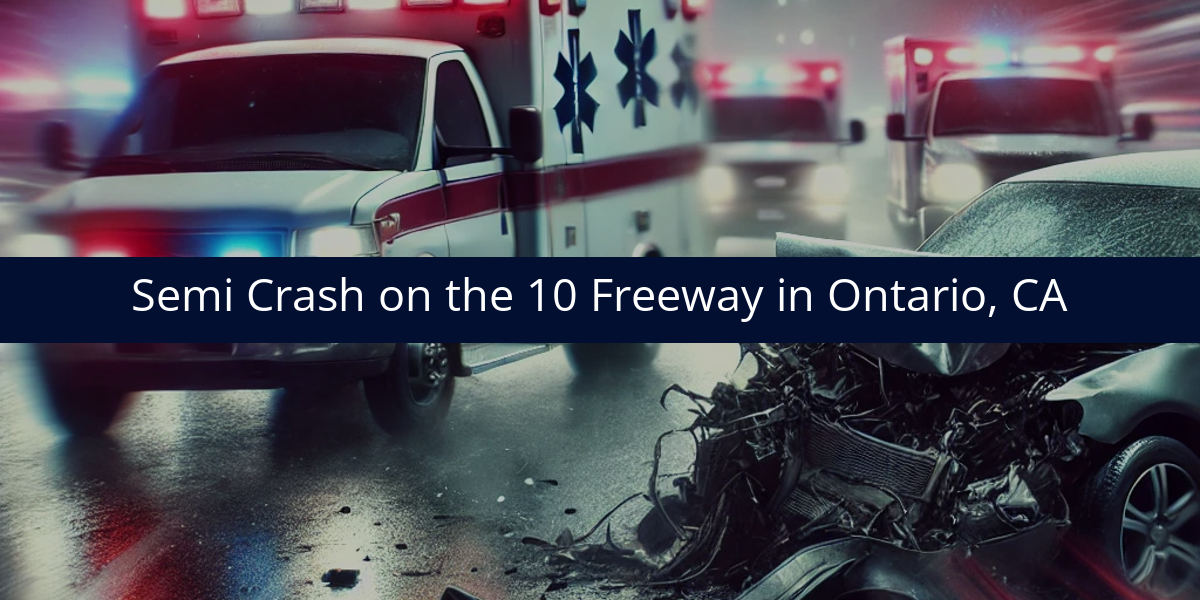
Authorities in Ontario, California reported that three people were killed and four others were injured Tuesday afternoon in a multi-vehicle crash involving a semi-truck and several other vehicles on the 10 Freeway. According to officials, the crash occurred around 1:15 p.m., prompting a large response. Three victims were pronounced dead at the scene, and four others were transported to area hospitals. Authorities later confirmed that one of the hospitalized individuals, a semi-truck driver believed to be in his 20s, was arrested on suspicion of driving under the influence of drugs. The investigation remains ongoing.
When a commercial vehicle driver is accused of operating under the influence, it raises immediate concerns about driver qualification, supervision, and whether the carrier company properly verified the driver’s fitness to operate a heavy truck.
What Investigators Will Likely Examine
Investigators will focus on establishing the semi-truck driver’s level of impairment and the sequence of events leading to the crash. Toxicology tests will determine whether drugs or other substances contributed to impaired judgment or reaction time. Authorities will also review dash camera footage, witness statements, and the truck’s Engine Control Module (ECM) data to reconstruct how the crash occurred.
The driver’s employment history, medical certification, and prior driving record will be key pieces of evidence. Federal regulations require commercial carriers to perform pre-employment screening, random drug testing, and ongoing fitness evaluations to ensure drivers are physically and mentally capable of operating large trucks safely.
Evaluating Carrier Oversight and Compliance
Investigators will likely review the trucking company’s compliance with Federal Motor Carrier Safety Administration (FMCSA) standards. This includes checking whether the carrier conducted required background checks, substance testing, and safety training before allowing the driver to operate commercially.
If the company failed to identify signs of substance abuse or neglected to follow random drug-testing procedures, investigators may determine that inadequate oversight contributed to the crash. In some cases, systemic lapses in company safety management can allow unfit or impaired drivers to remain on the road despite clear risks.
Key Evidence That Can Clarify the Full Picture
Beyond toxicology and ECM data, investigators will examine dispatch communications, work schedules, and the driver’s electronic logging device (ELD) records to determine how long he had been on duty before the crash. Excessive work hours or poor supervision can exacerbate fatigue and impair performance. Physical evidence from the roadway will also help reconstruct the timing and severity of the impact.
Why Driver Fitness Must Be Closely Scrutinized
When a semi-truck driver is suspected of impairment, it points to a potential failure not only by the individual, but also by the systems responsible for ensuring driver fitness. The size and power of a commercial truck demand full alertness and strict adherence to safety standards. A comprehensive investigation will help determine whether this driver should have been operating at all and whether lapses in oversight contributed to the crash.
 call us
  Email Us
  Text us