
Waverly, NE — May 5, 2025, one person was injured in a truck accident shortly after 12:45 p.m. along Interstate Highway 80.
According to authorities, one person was traveling in an eastbound Ford Fusion on I.H. 80 in the vicinity of the North 162nd Street intersection when the accident took place.
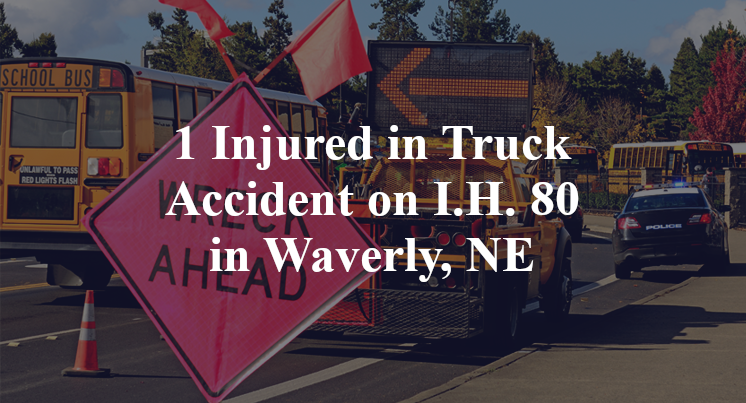
Officials indicate that, for as yet unknown reasons, an 18-wheler that had been parked in the right shoulder of the eastbound lanes of the highway allegedly attempted an illegal U-turn in order to head westbound on the highway at an apparently unsafe time. A collision consequently took place between the Fusion and the 18-wheeler.
The person who had been behind the wheel of the 18-wheeler reportedly sustained injuries of unknown severity due to the wreck and was transported to a local medical facility by EMS in order to receive treatment. Additional details pertaining to this incident—including the identity of the victim—are not available at this point in time. The investigation is currently ongoing.
Commentary by Attorney Michael Grossman
Any time an 18-wheeler attempts a U-turn on a major interstate, that maneuver deserves serious scrutiny. These highways are designed for high-speed, one-directional traffic, and U-turns across the median or from the shoulder are almost always dangerous—if not outright prohibited. From a legal standpoint, the moment a commercial truck enters active lanes against the intended flow of traffic, every decision leading up to that point becomes critical to understanding what might have happened.
The first question that comes to mind is why the truck was parked on the shoulder in the first place. Was it a breakdown, a missed exit, or something else? More importantly, why did the driver decide to re-enter traffic by attempting a U-turn across the highway instead of taking the next legal turnaround or exit? I’ve handled cases where drivers took shortcuts—sometimes under pressure to stay on schedule—and the result was a catastrophic crash. If that kind of decision-making was at play here, it points not only to individual error but potentially to broader issues with company oversight or training.
It’s also worth noting that pulling a maneuver like this in broad daylight, on a busy highway, involves a serious lapse in judgment. Even a fully loaded passenger car can struggle to avoid a large vehicle making a slow turn across lanes. Add highway speeds and limited reaction time into the mix, and it becomes clear just how dangerous this situation could have been for any nearby drivers—especially those who had no reason to expect a truck to suddenly block their path.
And if the 18-wheeler was being operated under a commercial carrier, the company behind it has to be part of the investigation. Was the driver adequately trained to handle emergency situations or route corrections safely? Did the company create a delivery schedule that pushed the driver into making risky decisions? Were there policies in place for what to do after a missed turn or highway error? If the company didn’t give its driver the tools or training to avoid situations like this, then they may bear just as much responsibility as the person behind the wheel.
Getting to the bottom of a crash like this means asking the right questions and refusing to stop at surface-level explanations. Serious wrecks deserve serious investigation, not assumptions. Understanding why the truck was on the shoulder, why it attempted a U-turn, and whether the company took reasonable steps to prevent that decision is key to figuring out what might have happened. Getting clear answers to these questions is the least that can be done to help those affected find the clarity and closure they deserve.

 call us
  Email Us
  Text us