
Schaumburg, IL — July 29, 2025, one person was killed due to a multi-vehicle truck accident shortly before 1:45 p.m. along Interstate Highway 290.
According to authorities, the accident took place in the westbound lanes of I.H. 290 in the vicinity of Higgins Road.
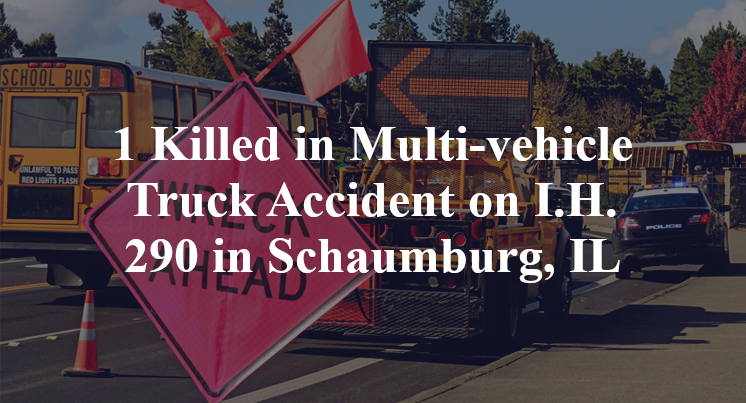
Officials indicate that, for as yet unknown reasons, a collision took place between four separate vehicles, one of which was apparently an 18-wheeler. Preliminary reports say that a van somehow became wedged beneath the 18-wheeler over the course of the accident.
One person reportedly sustained fatal injuries over the course of the accident. It has not been reported whether or not any other people received injuries and what the severity of those injuries may have been. Additional details pertaining to this incident—including the identity of the victim—are not available at this point in time. The investigation is currently ongoing.
Commentary by Attorney Michael Grossman
When a van ends up wedged beneath an 18-wheeler during a multi-vehicle crash, the immediate concern becomes how that kind of underride situation was allowed to happen in the first place. These are among the most dangerous collisions on the road, often leaving the smaller vehicle’s occupants with little to no chance of survival. That’s why these incidents demand close scrutiny—not just of the drivers involved, but of how the equipment was configured and maintained.
We don’t yet know which vehicle initiated the crash or how the chain reaction unfolded. But the fact that a van ended up under a trailer suggests either the trailer was struck from behind or crossed in front of the van. Each possibility raises different legal questions. If the truck suddenly merged or stopped short, the question becomes whether the driver gave other motorists enough time to react. If the van hit the truck from behind, then investigators must examine speed, visibility, and whether the trailer had a properly installed and maintained underride guard.
In past cases, I’ve seen how a missing or defective underride guard can make a survivable crash fatal. The guard’s job is to keep smaller vehicles from sliding underneath the trailer, and when it fails—whether due to poor design, lack of maintenance, or an improper height setting—the results are catastrophic. That kind of equipment failure doesn’t always show up in police reports, but it can come to light in civil litigation if someone looks closely at the trailer specifications and maintenance records.
Even if the guard was in place, there’s still the matter of how the crash started. A four-vehicle pileup doesn’t happen in a vacuum. Someone made a decision—too fast, too close, not paying attention—that kicked off the chain of events. The goal of any investigation is to identify that point of failure and determine whether more than one party shares in the blame.
Key Takeaways:
- The van becoming wedged under the trailer points to a possible underride scenario, which is often fatal.
- It’s not yet known whether the truck pulled into the van’s path or was struck from behind, but each has different implications for fault.
- The condition and presence of an underride guard could determine whether this crash was survivable.
- Investigators should examine vehicle movement, trailer equipment, and the full sequence of events to determine who’s responsible.
- Multi-vehicle crashes often involve a series of poor decisions—not just one mistake—making full evidence collection essential.

 call us
  Email Us
  Text us