
Huntersville, NC — May 19, 2025, one person was injured in a truck accident at about 4:15 p.m. on northbound Interstate 77.
Authorities said a semi-truck rear-ended a car transport truck near Hambright Road, causing a large fuel spill.
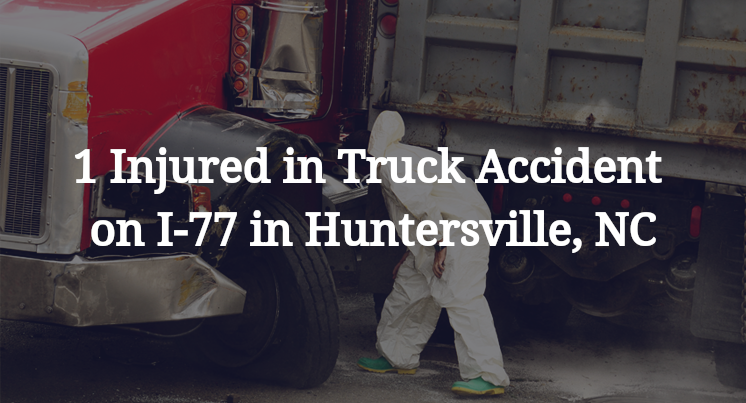
One person suffered life-threatening injuries in the crash, according to authorities, but it is not clear how that person was involved in the accident.
Authorities have not released any additional information about the Mecklenburg County crash at this time. The accident is still being investigated.
Commentary by Attorney Michael Grossman
When a semi-truck rear-ends another commercial vehicle on a major interstate, especially one as visible and slow-moving as a car hauler, it raises serious concerns about driver attention and following distance. This crash on I-77 near Hambright Road not only left someone with life-threatening injuries, but also caused a significant fuel spill; both of which suggest a high-speed impact that likely could have been avoided.
Rear-end collisions between trucks often come down to one key issue: was the trailing driver maintaining a safe distance and speed for conditions? In commercial trucking, that’s not just a best practice; it’s a legal duty. Professional drivers are trained to anticipate slowdowns, avoid tailgating and stay alert to any obstruction or traffic change ahead. When one truck slams into the back of another, especially in daylight hours and on a clear roadway, it often signals that the driver either wasn’t paying attention or failed to react in time.
The fact that this collision resulted in a large fuel spill further indicates a violent impact. Fuel systems on commercial trucks are built to withstand minor collisions. A rupture likely means that the force of the crash was substantial enough to compromise key components, raising the question of just how fast the rear truck was going and whether it even braked before impact. That’s something investigators can determine through engine control module data, which will show speed, throttle and brake application in the seconds before the crash.
Another unanswered question is who exactly was injured and how they were positioned in the crash. If the person hurt was in a vehicle between the two trucks, that points to an even more complex chain reaction, and even greater risk of legal liability for the driver who initiated the collision. If it was one of the truck drivers themselves, that may underscore just how violent the crash really was.
Regardless of who was injured, the legal principle remains the same: a commercial truck striking another from behind is almost always a preventable event. And when that failure leads to someone being critically hurt and hazardous materials spilling onto a busy highway, it becomes more than just a traffic incident—it becomes a case study in why professional drivers are held to a higher standard. Because when that standard isn’t met, the consequences don’t just stay with the driver. They ripple out to everyone sharing the road.

 call us
  Email Us
  Text us