Augusta County, VA — July 22, 2025, Georgeanna Hardesty and Sabrina Harris were killed due to a single-vehicle truck accident just after 6:15 a.m. along I.H. 64.
According to authorities, 51-year-old Georgeanna Hardesty, who was from Iron Gate, Virginia, and 50-year-old Sabrina Harris, from Covington, Virginia, were traveling in an eastbound Freightliner on I.H. 64 in the vicinity of Mile Marker 89 when the accident took place.
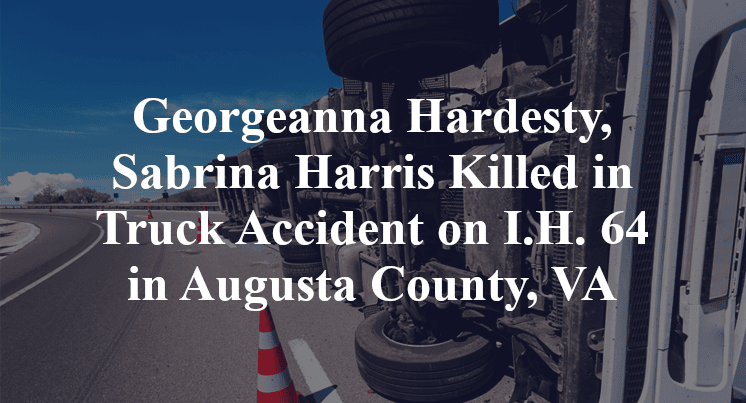
The cause of the accident remains unclear. Officials indicate that, for as yet unknown reasons, the truck overcorrected and went off of the right side of the road, crashing through a guardrail and heading down an embankment. It apparently came to a stop after colliding with a tree and overturning onto one side.
Both Hardesty and Harris reportedly suffered fatal injuries over the course of the accident and were declared deceased at the scene. Additional details pertaining to this incident are not available at this point in time. The investigation is currently ongoing.
Commentary by Attorney Michael Grossman
When a commercial truck veers off the road, crashes through a guardrail, and overturns, it’s only natural to wonder what caused such a drastic loss of control—especially on an open stretch of interstate with no mention of other vehicles being involved. In situations like this, there are far more possibilities than most people realize, and each one points toward a different kind of failure—mechanical, human, or institutional.
The report says the truck “overcorrected,” but that’s more a description of what the vehicle did than an explanation of why it happened. What triggered the overcorrection? Was the driver responding to a real hazard, like an animal in the road or a tire blowout? Or was there a lapse in attention that caused the truck to drift off-course in the first place?
Those are the kinds of questions that only physical evidence and onboard data can answer. The truck’s engine control module (ECM) could reveal critical details about speed, braking, and steering inputs in the moments before the crash. If the vehicle had an in-cab camera—and many commercial trucks do—then investigators may be able to determine whether the driver was alert, fatigued, or distracted.
Another major area of concern is mechanical failure. A tire blowout, brake imbalance, or steering issue can easily lead to a fatal overcorrection, especially in a fully loaded truck. But proving mechanical failure takes more than just looking at the wreck—it requires a full inspection by someone who knows what to look for. And that assumes the vehicle hasn’t already been cleared from the scene and towed away before such an inspection could take place.
Lastly, there’s the human element. Who owned the truck? Was the driver a company employee or an owner-operator? What kind of schedule were they on, and how much rest did they have? I’ve worked on cases where fatigue played a major role, not because the driver was reckless, but because the system they worked in pushed them too hard. Those patterns don’t show up in a single police report—they require pulling driver logs, dispatch records, and sometimes even phone GPS data.
No one can say for certain what led to this crash without a full investigation. But I do know this: if the right questions aren’t asked early—and the right evidence isn’t preserved—then it becomes much harder for the truth to come out later. And that’s not just a legal problem; it’s a moral one.
Key Takeaways:
- The reported “overcorrection” raises questions about what caused the initial loss of control.
- Onboard data like ECM records and in-cab video can help reconstruct the truck’s movements.
- Mechanical failure, driver fatigue, or distraction are all possible contributors and need to be ruled out.
- A thorough investigation should examine who owned the truck, what schedule the driver was on, and whether the vehicle was properly maintained.
- Early evidence preservation is critical—once it’s lost, getting to the truth becomes far more difficult.