
East Providence, RI — August 8, 2025, two people were injured due to a garbage truck accident at approximately 5:30 a.m. along Mink Street.
According to authorities, two people were traveling in a sedan in the vicinity of the Mink Street and Wampanoag Trail (S.H. 114) intersection when the accident took place.
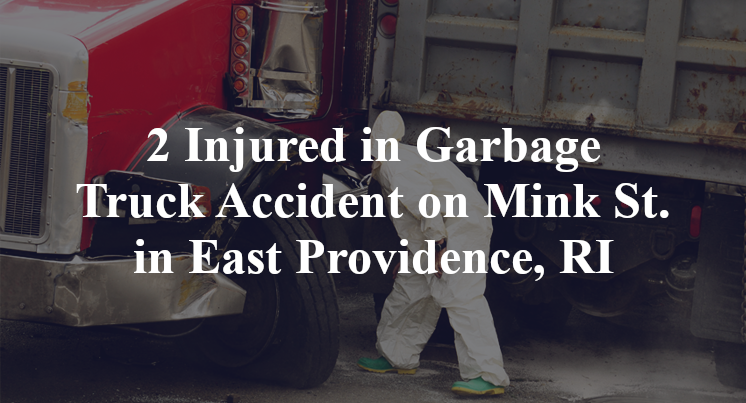
Officials indicate that, for as yet unknown reasons, the sedan collided with the rear-end of a garbage truck that had allegedly been at a stop at the intersection due to a traffic signal.
A woman was entrapped in the wreckage of the sedan, reports state, and had to be extracted by emergency personnel. Once freed from the aftermath, she and one other person who had also been in the sedan were transported to a local medical facility by EMS in order to receive necessary treatment for the serious injuries they incurred over the course of the accident.
Additional details pertaining to this incident—including the identities of the victims—are not available at this point in time. The investigation is currently ongoing.
Commentary by Attorney Michael Grossman
When a car crashes into the rear of a stopped garbage truck, it may seem like a straightforward case of driver inattention—but that assumption can be dangerously misleading. In reality, rear-end collisions involving large commercial vehicles often raise complex questions about visibility, lighting, and whether the truck was positioned in a way that gave others a fair chance to react.
Garbage trucks in particular operate under unusual conditions. They start and stop frequently, often in low-light hours like early morning, and they tend to move slower than surrounding traffic. That makes it critically important for them to be highly visible from a distance. Reflective tape, working brake lights, and hazard flashers all play a role in giving approaching drivers enough warning—especially when the truck is stopped at an intersection, as reported here.
In similar cases I’ve worked, poor lighting or a lack of conspicuity markings on the rear of a truck made it nearly impossible for following drivers to recognize what they were approaching until it was too late. And when that happens, even drivers who are technically “at fault” for rear-ending a vehicle may not be held fully responsible—because the truck itself created an unreasonable hazard.
This crash occurred around 5:30 a.m.—a time when visibility is often reduced due to low light or glare. If the garbage truck wasn’t properly illuminated, or if it was stopped at an unexpected angle or position in the road, those facts could change the entire liability picture. Investigators will need to evaluate not just what the sedan driver did or didn’t do, but whether the truck was where and how it should have been.
Key Takeaways:
- Rear-end crashes with garbage trucks may involve issues of visibility, not just following distance.
- Early morning light conditions make proper lighting and reflective markings on the truck essential.
- The truck’s position and use of brake lights or hazard signals will factor heavily into any fault analysis.
- Past cases show that large vehicles without adequate visibility features can share blame in rear-end collisions.
- A full investigation must examine whether the truck gave others a fair opportunity to see and avoid it.

 call us
  Email Us
  Text us