
Santa Maria, CA — April 16, 2025, one person was killed in a bus accident at about 11:15 a.m. on the onramp to northbound U.S. Route 101.
Authorities said a motorcycle turning right onto the highway onramp from Main Street crashed int the side of an agricultural bus.
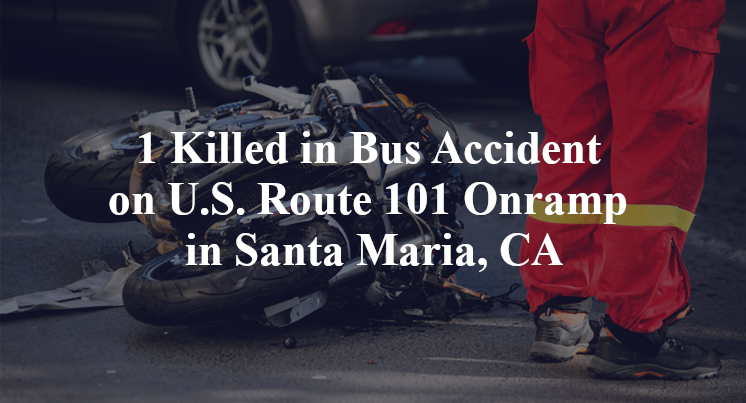
The motorcyclist, whose name has not been made public at this time, died after being transported to a local hospital, according to authorities.
No one on the bus, which carries farm workers to sites around the area, was injured in the crash, authorities said.
Authorities have not released any additional information about the Santa Barbara County crash at this time. The accident is still under investigation.
Commentary by Attorney Michael Grossman
When a crash involves a commercial vehicle transporting workers, especially one operating near a highway access point, the question that often gets overlooked is whether that vehicle was being operated with the level of caution its duty requires. Buses carrying agricultural workers, like any other commercial transport, are expected to navigate turns, merges and intersections with the understanding that their size and limited maneuverability increase the risk to others around them, particularly motorcyclists, who are harder to see and more vulnerable in any collision.
In this context, the law expects commercial drivers to make careful, predictable movements, especially at junctions where vehicles may be accelerating or merging. That includes signaling turns, yielding appropriately and ensuring their path is clear before completing a movement that could place them in conflict with other road users. If the commercial driver failed to check mirrors or misjudged the speed or proximity of a smaller vehicle, those are decisions that will come under scrutiny in any investigation.
At the same time, the presence of a motorcycle raises other legal considerations. Motorcycles can be difficult to detect in peripheral mirrors, and they often appear farther away than they actually are due to their smaller size. That’s precisely why professional drivers are trained to account for them: because the margin for error is so small. If a commercial driver overlooks a motorcycle in their path, the law doesn’t treat that as a minor oversight. It treats it as a failure to live up to the standards required for operating a commercial vehicle.
The location of the crash near a highway onramp also adds complexity. These are areas where vehicles accelerate, merge and often jockey for position in tight space. Any commercial vehicle entering or crossing such a space has to do so only when it’s completely safe, and with full awareness of approaching traffic.
Ultimately, when one vehicle is operated by a professional and the other by a vulnerable road user, the burden of caution is clear. This isn’t about assigning fault based on who hit whom. It’s about determining whether every reasonable step was taken to prevent a crash that never should have happened in the first place.

 call us
  Email Us
  Text us