

Trinity County, TX — February 4, 2025, One person was injured following a car accident that occurred at around 4;00 A.M. on US 287.
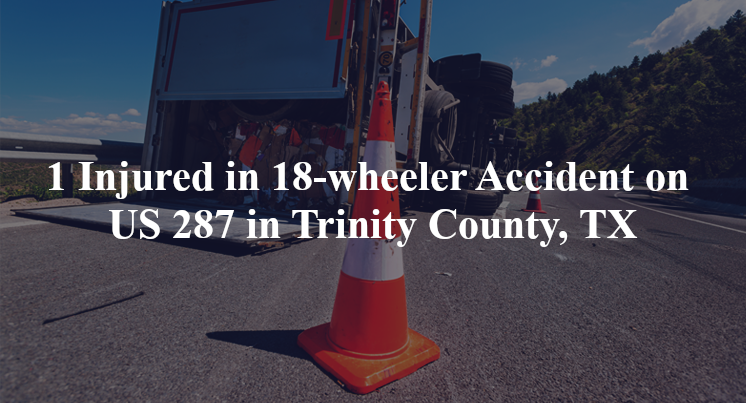
An investigation is underway following an 18-wheeler accident that left one person injured during the early morning hours of February 4th. According to official reports, an 18-wheeler hauling lumber was traveling on US 287 outside of Pennington when for unknown reasons the truck flipped over and spilled its cargo.
When first responders arrived on the scene they found that the driver had sustained serious injuries and was transported to the hospital via helicopter. At this time it remains unknown what caused the truck to turn over, and the identity and status of the driver remains unknown, however this is an ongoing investigation and more details may be released in the future.
Commentary by Attorney Michael Grossman
When I read about a crash like this, my first thought is that I hope the injured driver receives the medical care they need and makes a full recovery. At first glance, a truck hauling a heavy load flipping over might seem like a straightforward case of driver error or shifting cargo, but my experience has shown me that crashes like this are often more complex than they appear. To truly understand what happened, there are three critical questions that must be asked.
The first question is whether authorities conducted a thorough investigation of the crash. Law enforcement officers do their best with the resources available to them, but their primary focus is often reopening the roadway and ensuring public safety rather than conducting an in-depth forensic analysis. A proper crash investigation should include accident reconstruction, witness statements, and an examination of road conditions. For example, did the truck hit debris or a pothole? Was the road slick from early morning moisture? Did another vehicle’s actions force the driver to take evasive action? These are details that need to be explored to ensure a complete understanding of the crash.
The second question is whether anyone has considered the possibility of a vehicle defect contributing to the crash. A fully loaded lumber truck is a challenge to control under normal circumstances, but if a mechanical failure occurred—such as a brake malfunction, a suspension failure, or a tire blowout—the driver may have had little to no chance to prevent the rollover. Mechanical failures are frequently overlooked in initial investigations, especially if authorities are focused solely on cargo shifting or driver error. However, a forensic examination of the truck before it is repaired or scrapped could reveal whether a defect played a role.
The third question is whether all available electronic data related to the crash has been collected. Commercial trucks are equipped with electronic control modules (ECMs) that store critical information such as speed, braking activity, and steering inputs leading up to the crash. Additionally, if the truck had a dashboard camera or GPS tracking system, those records could provide valuable insight into what happened. Too often, this kind of electronic evidence is not preserved, and once it’s lost, it’s gone forever, making it much harder to determine the true cause of the accident.
At the end of the day, crashes like this deserve a thorough investigation—not just for the driver and their loved ones, but for the community as a whole. If there was a mechanical issue, a road hazard, or another contributing factor, knowing about it could prevent future accidents. Ensuring that these three critical questions are fully explored is the only way to get the answers that those affected by this crash deserve.
 call us
  Email Us
  Text us