

Lansdale, PA — May 7, 2025, One person was injured following an 18-wheeler accident that occurred at around 10:20 A.M. on PA Turnpike.
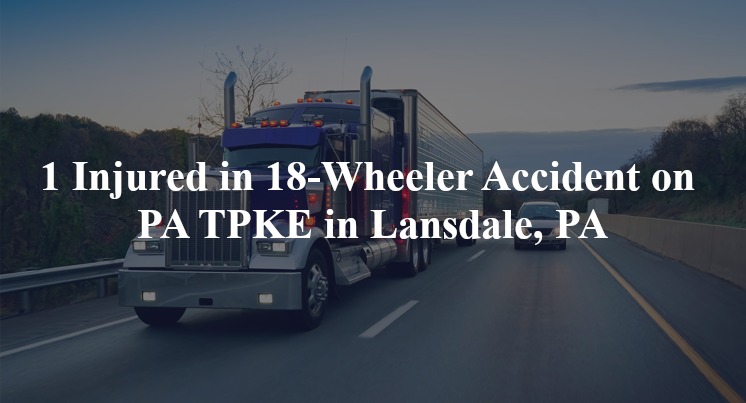
An investigation is underway into a car accident that left one person injured during the morning hours of May 7th. According to official reports, an 18-wheeler was traveling on the Pennsylvania Turnpike in the southbound lanes near the Lansdale exit, when for unknown reasons the truck lost control and overturned, causing severe damage.
When first responders arrived on the scene, they found that the driver had sustained injuries and transported them to the hospital. At this time there has been no further information released about the accident, including the status of the driver’s injuries or how the tractor-trailer lost control, however this remains an ongoing investigation and more details may be released by authorities in the future.
Commentary by Attorney Michael Grossman
When I hear about a commercial truck overturning, especially on a well-maintained highway like the Pennsylvania Turnpike, my first thought isn’t about the damage or injuries—though those matter—but about what really caused the truck to lose control in the first place. Most people may assume it’s just bad luck or driver error. In my experience, that’s rarely the full story.
The key legal question here is: Why did the truck overturn? Was the driver fatigued, distracted, or speeding? Was there a mechanical failure that made the truck unstable? Did the cargo shift inside the trailer, throwing off the vehicle’s balance? These aren’t just technical questions—they’re central to determining who is legally responsible for the crash.
Overturns can result from overloaded or poorly secured cargo, and if that’s what happened here, then the driver might not be the only person to blame. Shippers, loading crews, or the driver’s employer may have all played a part by not following safety protocols. For instance, I once litigated a case where an improperly secured steel slab caused a truck to become dangerously unstable, leading to a deadly accident just a few miles into the trip.
It’s also worth asking what role the trucking company may have played. Did they train the driver properly? Was the driver operating under a realistic schedule? In some companies, drivers face pressure to meet deadlines no matter what, and that pressure can lead to rushed inspections or risky driving decisions.
To get answers, investigators will need to go beyond the crash scene. Truck crash investigations are never complete without pulling electronic control module (ECM) data from the truck, inspecting the braking and steering systems, and reviewing load documentation and driver logs. If those steps aren’t taken, then we won’t have an investigation—we’ll just have a surface-level report that tells us what happened but not why it happened.
In my view, crashes like this one demand a full-scale investigation. The goal shouldn’t just be to record what happened, but to hold the right people accountable based on the evidence. That can only happen when investigators ask the tough questions and look past the obvious answers.
 call us
  Email Us
  Text us