
Dallas, TX — April 21, 2025, One person was injured following an 18-wheeler accident that occurred at around 4:42 A.M. on I-35.
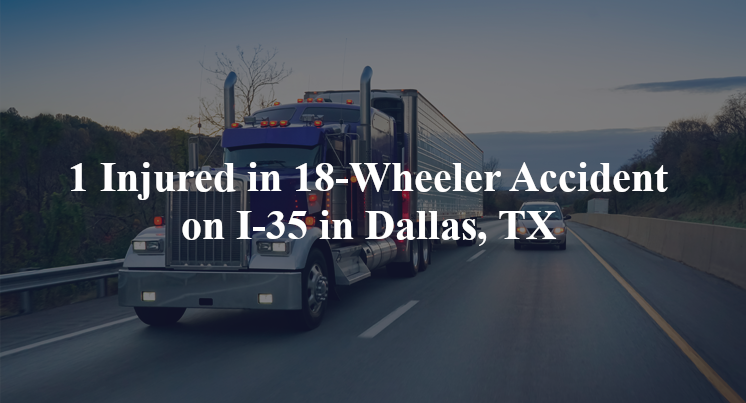
An investigation is underway into a car accident that left one person injured during the morning hours of April 21st. According to official reports, an 18-wheeler hauling fuel was traveling on I-35 in the northbound lanes near Laureland Road, when for unknown reasons the truck lost control and crashed, spilling the fuel on the road.
When first responders arrived on the scene, they found that the driver had sustained injuries and transported to the hospital for treatment. At this time there has been no further information released about the accident, including what caused it or the status of the driver’s injuries, however this remains an ongoing investigation and more details may be released by authorities in the future.
Commentary by Attorney Michael Grossman
When I hear about a fuel truck crashing and spilling its load, the question that immediately comes to mind is, “What caused the driver to lose control?” That’s not just idle curiosity—it’s a legal question that cuts right to the heart of who, if anyone, should be held accountable.
Crashes involving fuel-hauling trucks are always high stakes. It’s not just the vehicle or its driver at risk—there’s a dangerous cargo involved that can multiply the consequences of even a minor crash. That’s why the investigation into an incident like this one has to look beyond what’s visible at the crash scene.
One of the first things I’d want to know is whether mechanical failure played a role. When trucks carry flammable materials, the law requires certain safety features and stricter maintenance schedules. If brakes failed or a steering component gave out, that could indicate a failure in maintenance—possibly by the company responsible for the vehicle. If that’s the case, it’s not just about a crash, it’s about whether someone cut corners.
I’d also want to know what kind of monitoring systems were installed in the truck. These days, many rigs carry engine control modules that store data about speed, braking, and even steering inputs in the moments leading up to a crash. Some trucks also have in-cab cameras, which can reveal whether a driver was distracted or struggling to control the vehicle for another reason—like a medical emergency or a sudden obstacle on the road.
Finally, it’s worth asking about the driver’s schedule and training. Was the driver on the road too long without a break? Were they trained to handle the kind of cargo they were carrying? Not every trucking company properly vets their drivers for fuel-hauling jobs, which require specialized knowledge and skills. That kind of oversight—or lack of it—can make all the difference in whether a crash like this happens in the first place.
The bottom line is, we can’t assume that just because only one vehicle was involved that the driver alone is responsible. That might turn out to be true, but in my experience, especially with fuel trucks, there’s almost always more to the story. The real issue is whether investigators will take the time to look into all the evidence—not just what’s lying in the wreckage, but what the paperwork, training records, and onboard data have to say. Only then can anyone start to piece together what really happened.

 call us
  Email Us
  Text us