

Burleson County, TX — June 22, 2024, Vance Behrens was injured due to a motorcycle versus car accident shortly before 7:30 p.m. along State Highway 36.
According to authorities, 20-year-old Vance Behrens was traveling on a northbound Yamaha motorcycle on State Highway 36 at the Thornberry Drive intersection when the accident took place.
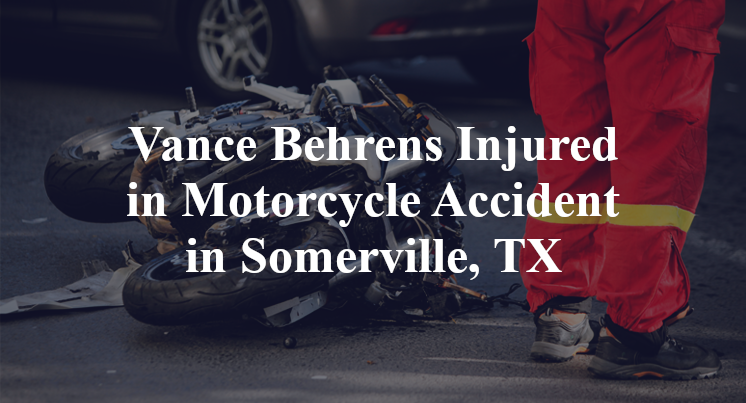
Officials indicate that, for as yet unknown reasons, an eastbound Toyota 4Runner made a left turn to head north on the highway at an apparently unsafe time, failing to yield the right-of-way at a stop sign. A collision consequently occurred between the right side of the Toyota and the left side of the motorcycle.
Behrens reportedly sustained serious injuries over the course of the accident. He was transported to a local medical facility by EMS in order to receive necessary treatment. Additional details pertaining to this incident are not available at this point in time.
Commentary by Attorney Michael Grossman
Crashes involving motorcycles and turning vehicles at stop-controlled intersections often stem from a simple—but costly—miscalculation. When a rider ends up in the hospital, it’s not enough to say someone failed to yield. The real question is whether that mistake could have been prevented or better understood.
Did the authorities thoroughly investigate the crash?
A proper review should include how long the motorcycle was visible before the turn, whether the driver of the 4Runner paused or rolled through the stop, and how far the motorcycle was from the intersection when the turn began. Timing, distance, and driver behavior are central here. If investigators didn’t take measurements or reconstruct those final seconds, the case risks missing how the crash truly unfolded.
Has anyone looked into the possibility that a vehicle defect caused the crash?
On the Toyota’s side, steering hesitation or sensor failures might explain a poorly timed turn. On the Yamaha, issues like brake fade, suspension instability, or unresponsive throttle could affect how quickly the rider could react. If neither vehicle was inspected, it’s impossible to rule out whether mechanical shortcomings influenced the severity—or even the occurrence—of the crash.
Has all the electronic data relating to the crash been collected?
While motorcycles typically don’t log much data, many riders use helmet or handlebar cameras that could show the moment of impact. The Toyota may have recorded throttle position, brake use, or steering input. If investigators didn’t recover that data or check nearby traffic or security cameras, valuable details about what each driver did—or didn’t do—may already be lost.
When someone’s seriously hurt, what matters isn’t just who turned when—it’s whether anyone asked the hard questions about how the crash could have been avoided.
Takeaways:
- Investigators should analyze vehicle positioning, timing, and sight lines at the turn.
- Mechanical problems in either vehicle could have contributed and must be ruled out.
- Camera footage or onboard data may provide missing context about speed and reaction.
 call us
 Email Us
 Text us