

Abilene, TX — October 29, 2025, one person was injured due to a truck accident at approximately 10:00 a.m. along U.S. Highway 277.
According to authorities, the accident occurred in the vicinity of the U.S. 277 and Summit Avenue (F.M. 1235) intersection.
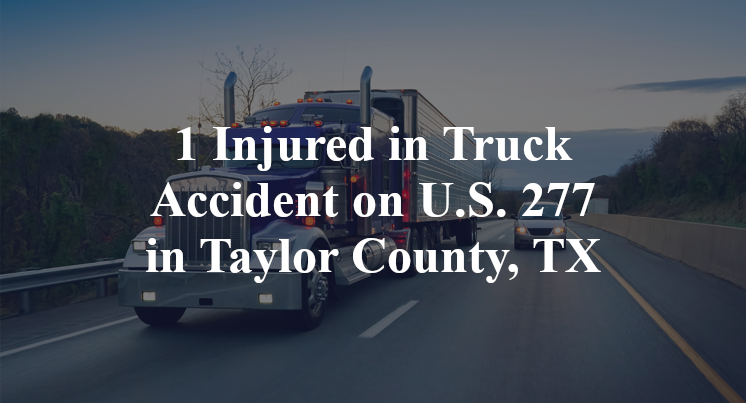
Officials indicate that, for reasons yet to be confirmed, a collision took place between a sedan and an 18-wheeler that had been headed northbound on the highway.
The man who had been behind the wheel of the sedan was reportedly entrapped in the wreckage and had to be extracted by emergency personnel. Once freed from the aftermath, he was transported to a local medical facility by EMS in order to receive necessary treatment for the serious injuries incurred in the crash. No one from the truck was hurt, reports state.
Additional details pertaining to this incident—including the identity of the victim—are not available at this point in time. The investigation is currently ongoing.
Commentary by Attorney Michael Grossman
When a collision between a sedan and an 18-wheeler results in the smaller vehicle’s driver being trapped and seriously injured, the first legal question is how the two vehicles came into conflict—especially near an intersection where turning, merging, or lane changes are common. The fact that the truck was reportedly traveling northbound gives us a directional clue, but it still leaves open several critical possibilities.
Was the 18-wheeler attempting a turn across traffic? Was the sedan entering the highway from Summit Avenue? Did either vehicle fail to yield, signal, or maintain lane position? Without that information, we can’t make assumptions—but physical evidence, ECM data, and intersection footage (if available) will be crucial in answering those questions.
What we do know is that the sedan was damaged enough to trap the driver. That suggests either a high-speed impact or a significant mismatch in vehicle positioning—perhaps a T-bone or underride situation. In my experience, those kinds of outcomes often raise questions about whether the truck’s movement was abrupt, poorly signaled, or misjudged, especially when passenger vehicles are nearby.
Another key issue is visibility and traffic control. Was the intersection governed by traffic lights, stop signs, or free-flow lanes? If one vehicle assumed it had the right-of-way but didn’t, or if poor sightlines contributed to a delayed reaction, that will shape how liability is assigned.
It’s also worth noting that no injuries were reported from the truck, which sometimes suggests the point of impact was on or near the side of the passenger vehicle. If that’s the case, the truck’s maneuver—rather than the sedan’s—may have initiated the collision. But again, that conclusion depends on clear evidence from the crash scene, vehicle damage, and driver accounts.
Key Takeaways:
- The key issue is how the two vehicles entered conflict near the intersection—turning, merging, or lane change errors are all possible.
- Crash reconstruction should focus on vehicle movement, right-of-way, and line-of-sight conditions.
- ECM data and dash cam footage will be crucial to understanding the truck’s behavior in the moments before impact.
- Significant damage to the sedan suggests a forceful impact that may indicate fault, depending on positioning and speed.
- A full investigation is needed before any conclusions can be drawn about who was responsible.
 call us
 Email Us
 Text us