

Swansea, MA — November 29, 2024, one person was injured following a pickup truck versus semi-truck accident at approximately 5:00 p.m. on G.A.R. Highway.
According to authorities, an 18-wheeler with a load of pool water was in the act of making a left turn onto the Grand Army of the Republic Highway in the vicinity southeast of Old Fall River Road when the accident took place.
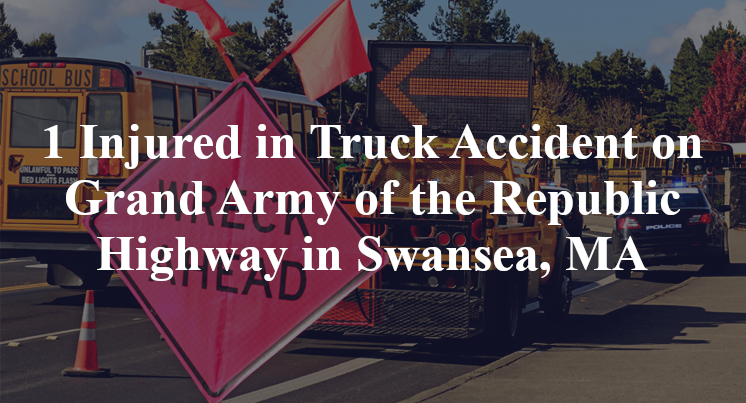
The cause of the accident remains unclear. Officials indicate that, for as yet unknown reasons, the 18-wheeler was involved in a collision with a pickup truck. The person who had been behind the wheel of the pickup truck sustained apparently serious injuries and was transported to a local medical facility by EMS in order to receive necessary treatment. No other injuries have been reported. Additional details pertaining to this incident—including the identity of the victim—are not available at this point in time. The investigation is currently ongoing.
Commentary by Attorney Michael Grossman
When accidents like this occur, people often assume they’re caused by a single moment of poor judgment or error. However, in my experience, crashes involving large trucks are rarely that simple and often require a deeper look into potential contributing factors.
What circumstances led to this collision between the pickup truck and the 18-wheeler as it attempted to turn onto the G.A.R. Highway? Was the semi-truck turning at an appropriate time, or was the pickup traveling at a speed that made the situation unavoidable? Were visibility, signaling, or road conditions factors? Understanding what set the stage for this collision is crucial to determining who or what bears responsibility.
One critical area that needs careful scrutiny is the operation of the semi-truck. Making a turn with an 18-wheeler is a complex maneuver that demands precision, awareness, and timing. Did the truck driver adequately assess oncoming traffic before beginning the turn? Large trucks require significant time to accelerate and complete turns, meaning any misjudgment can leave them vulnerable to collisions. Were the truck’s signaling systems working properly to alert other drivers of its intentions? Furthermore, the cargo—a load of pool water—may have influenced the truck’s performance. Was the load properly secured to prevent instability during the turn? Any shift in a liquid cargo can create balance issues, potentially affecting the driver’s ability to control the vehicle.
It’s also necessary to look beyond the driver’s actions to the trucking company that oversees the semi-truck’s operations. Companies have a responsibility to ensure their vehicles are roadworthy and their drivers are well-trained for challenging scenarios. Were the truck’s brakes, lighting, or other safety systems properly maintained? A malfunction in these systems could significantly increase the risk of a crash during maneuvers like turning. Additionally, did the company’s scheduling or delivery deadlines place undue pressure on the driver to act hastily? When trucking companies prioritize speed over safety, drivers may feel compelled to take risks they otherwise wouldn’t, which can lead to dangerous outcomes on the road.
Ultimately, the goal is to uncover the truth and provide answers to those affected by the accident. Even if it requires conducting an independent investigation to obtain critical evidence, it’s essential to examine every factor to ensure those impacted by the incident receive the clarity and closure they deserve.
 call us
 Email Us
 Text us