

Bexar County, TX — September 12, 2025, one person was injured due to a truck accident at approximately 3:00 a.m. along Interstate Highway 35.
According to authorities, a man was traveling in a passenger car on I-35 in the vicinity of the Poteet Jourdanton Freeway when the accident took place.
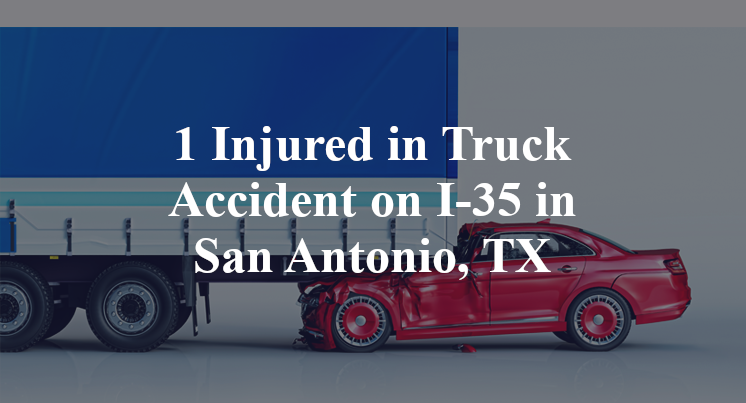
Officials indicate that, for reasons yet to be confirmed, the passenger vehicle collided with the rear-end of an 18-wheeler. The man was apparently entrapped in the wreckage and had to be extricated by emergency personnel. Once freed from the aftermath, the man was transported to a local medical facility by EMS in order to receive necessary treatment for the critical injuries he sustained over the course of the accident. Additional details pertaining to this incident—including the identity of the victim—are not available at this point in time. The investigation is currently ongoing.
Commentary by Attorney Michael Grossman
A rear-end crash into the back of an 18-wheeler often looks straightforward at first glance, but it’s not always as simple as “the car hit the truck.” The unanswered questions are what matter most here: Was the truck moving at highway speed, slowing down, or stopped in a travel lane? Was it properly marked and lit? Depending on those answers, the picture of responsibility can shift significantly.
One of the most common issues in these kinds of crashes is visibility. Trailers can be very difficult to see at night if reflective tape is worn or lights are malfunctioning. I’ve handled cases where a motorist never had a chance to recognize they were coming up on a slow or stopped truck until it was too late. That’s why federal rules require trucks to maintain reflective markings and operational lights.
Another question is whether the truck was where it should have been. If it had broken down and was left in a live lane without hazard lights, that changes the analysis entirely. On the other hand, if it was moving normally and the car simply approached too fast, the focus shifts to driver attentiveness in the passenger vehicle. The only way to know for sure is to examine physical evidence from the scene, including skid marks, dash cam footage (if available), and ECM data from the truck.
Investigators will also need to determine how long the driver of the car had to react and whether anything about the truck’s condition or position contributed to making that reaction impossible. Without that kind of scrutiny, it’s too easy to assume responsibility lies solely with the person in the smaller vehicle.
Key Takeaways:
- The key unknown is whether the truck was moving, slowing, or stopped at the time of impact.
- Poor visibility from missing lights or reflective tape can make rear-end collisions with trailers almost unavoidable.
- If the truck was stopped in a live lane without warnings, that could shift liability.
- Evidence like ECM data, skid marks, and dash cams will be crucial to determining how this crash unfolded.
- Responsibility depends on facts still to be confirmed—not on assumptions about who hit whom.
 call us
 Email Us
 Text us