

Plainfield, IL — December 22, 2024, one person was injured in a truck accident at about 10 a.m. on Interstate 55.
Authorities said a semi-truck went off an overpass after crash with another vehicle just north of U.S. Route 30. The truck flipped over onto the train tracks below, spilling its cargo of disinfectant wipes and chicken broth.
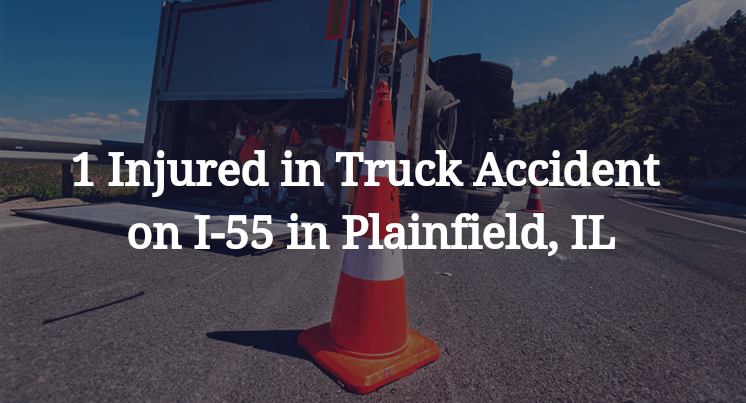
No additional information about the crash has been released at this time, so it is not clear what happened before the truck went off the overpass.
The semi-truck driver, whose name has not been released at this point, was taken to an area hospital with non-life-threatening injuries, authorities said. The driver of the other vehicle involved in the crash refused treatment.
The accident remains under investigation.
Commentary by Attorney Michael Grossman
This crash highlights the intricacies of commercial truck accidents, particularly when they occur in complex environments such as highway overpasses and involve multiple vehicles.
The first question investigators must answer is: What caused the collision between the semi-truck and the other vehicle? Did either driver engage in negligent behavior, such as speeding, improper lane changes or distracted driving? Investigators must also consider external factors, such as the condition of the roadway and visibility at the time of the crash.
If the semi-truck driver was at fault, the investigation must explore whether the trucking company contributed to the accident through systemic failures. For example:
- Training: Was the driver adequately trained to handle challenging road conditions, such as those on elevated overpasses?
- Maintenance: Did mechanical issues, like brake failure or a steering defect, play a role in the crash?
- Scheduling Pressures: Was the driver under undue pressure to meet a deadline, possibly leading to risky maneuvers?
The truck’s fall from the overpass introduces questions about infrastructure safety. Was the barrier on the overpass sufficient to prevent vehicles from going over the edge? While this aspect does not directly impact driver liability, it could lead to additional scrutiny of roadway design and maintenance responsibilities by local or state authorities.
The spilled cargo may seem innocuous, but truck cargo often poses unique risks. Disinfectant chemicals can be hazardous in certain concentrations, especially near train tracks where they could pose additional dangers if trains are operating. Proper loading and securing of cargo are critical legal and logistical considerations. If the cargo contributed to the severity of the crash (e.g., by causing instability), the shipper or loader could also bear some liability.
To understand the sequence of events, investigators should:
- Examine dashcam or traffic camera footage for insight into vehicle movements and driver behavior.
- Retrieve the semi-truck’s engine control module (ECM) data for information on speed, braking, and other mechanical conditions leading up to the crash.
- Subpoena the cell phone records of both drivers to rule out distraction.
- Review maintenance logs for the semi-truck and the securing procedures for its cargo.
Illinois employs a modified comparative negligence standard, which means liability could be shared between the truck driver, the other motorist, and possibly other parties. For example:
- If the other driver cut off the truck, they may bear a portion of the blame.
- If the truck driver lost control due to excessive speed, they and their employer may be held accountable.
- If improper cargo loading played a role, the shipper or loading company could also face liability.
This crash underscores the need for thorough investigation to uncover all contributing factors, particularly given the complex interplay of driver behavior, mechanical condition, and roadway design. The involvement of an overpass and train tracks adds layers of potential risk, making it critical to determine whether systemic issues, like inadequate infrastructure or poor cargo practices, exacerbated the situation. For those involved, ensuring accountability requires a methodical approach that leaves no question unanswered.
 call us
 Email Us
 Text us