

Accomac County, WA — May 6, 2025, one person was injured following a truck accident that occurred at about 3:00 a.m. along U.S. Highway 13.
According to authorities, the accident took place on U.S. Highway 13 in Accomack County.
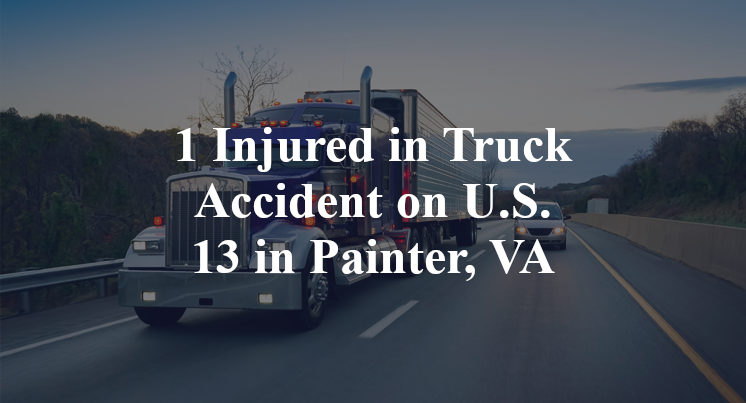
Details surrounding the accident remain scarce. Preliminary reports state that, for as yet unknown reasons, a collision took place between a passenger vehicle and an 18-wheeler.
At least one person was apparently entrapped in the wreckage and had to be extricated by emergency personnel. One individual reportedly suffered injuries of unknown severity and was transported to an area medical facility by EMS in order to receive necessary treatment.
Additional information pertaining to this incident—including the identity of the victim—is not available at this point in time. The investigation is currently ongoing.
Commentary by Attorney Michael Grossman
When a crash between a passenger vehicle and an 18-wheeler happens at 3:00 in the morning, and someone ends up trapped in the wreckage, that’s a strong sign the collision was violent and likely avoidable. At that hour, visibility is limited, fatigue can play a role, and traffic patterns are different than during the day. But from a legal standpoint, the question is always the same: What decisions did the truck driver make in the moments leading up to the crash—and were they the right ones given the circumstances?
Without more details, we can’t say for sure who was at fault, but there are certain patterns that tend to emerge in these early morning crashes. Was the truck stopped or moving slowly in an active lane? Was it attempting a turn, merge, or U-turn that placed it in the path of oncoming traffic? Or was it the passenger vehicle that failed to see the truck due to poor lighting or an obstructed view? Each of these scenarios calls for a different kind of investigation—but all of them require evidence that often isn’t collected unless someone knows to ask for it.
One of the most critical issues in any crash involving a commercial truck is whether the vehicle was properly lit and marked. If the trailer had faded or missing reflective tape, broken lights, or wasn’t positioned safely, a driver approaching in the dark might not have seen it until it was too late. That’s not just a technical violation—it’s a failure that can have deadly consequences.
If the truck was being operated for a business—and it likely was—then the company behind it needs to be part of the conversation. Was the driver properly rested and qualified? Was the truck maintained in accordance with safety regulations? Were they pushing to meet a delivery window that encouraged risky behavior? I’ve seen all of those things factor into similar crashes, and when they do, the responsibility doesn’t stop with the driver—it includes the people who made the decisions behind the scenes.
Getting to the bottom of a crash like this means asking the right questions and refusing to stop at surface-level explanations. Serious wrecks deserve serious investigation, not assumptions. Understanding how the truck was being operated, whether visibility or mechanical issues played a role, and whether the company followed its legal obligations is essential to figuring out what might have happened. Getting clear answers to these questions is the least that can be done to help those affected find the clarity and closure they deserve.
 call us
 Email Us
 Text us