

Manheim Township, PA — August 18, 2025, one person was injured in a truck accident on southbound U.S. Route 222/Oregon Pike.
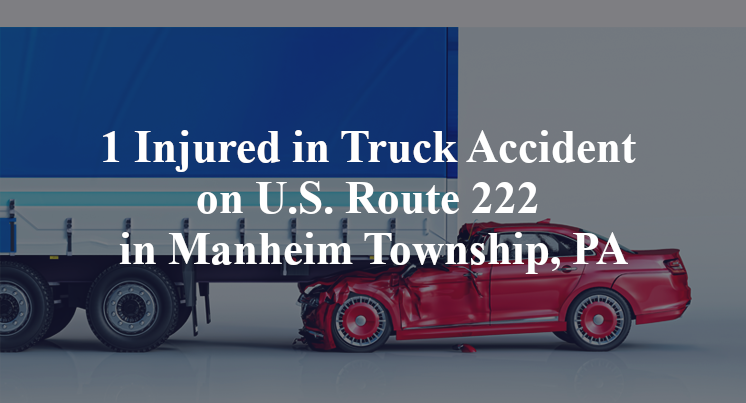
Authorities said a sedan crashed into the back of a semi-truck, wedging the car under the back of the trailer.
The driver, whose name has not been made public yet, was hospitalized with unspecified injuries after being extricated from the vehicle, according to authorities.
No other injuries were reported.
Authorities have not released any additional information about the Lancaster County crash at this time.
Commentary by Attorney Michael Grossman
When someone hears about a crash where a car ended up wedged under the back of a semi-trailer, one of the first questions they tend to ask is, “How could that even happen?” From a legal standpoint, that’s exactly the right question, and not just because the image is so severe. Rear-end collisions between smaller vehicles and 18-wheelers often involve serious injuries or worse, but determining who’s responsible is not always as straightforward as it seems.
Based on the limited information currently available, we know that a sedan struck the back of a semi-truck on U.S. Route 222. The impact caused the car to lodge underneath the trailer, a type of crash often referred to as an underride. The driver of the sedan was seriously hurt and had to be extricated from the vehicle. But the details that actually matter — Was the truck stopped or moving? Was it pulling back into traffic? Was it parked improperly? — haven’t been shared yet. And depending on how those questions are answered, very different legal implications come into play.
If the truck was parked or stopped in a lane of travel, one question is whether it had proper lighting or reflective markings. Underride crashes often happen at night or in low visibility when the back of a trailer blends into the road. In some of my previous cases, we discovered that reflective tape was missing or lights weren’t working, which made the trailer practically invisible until it was too late. The only way to know that here is to examine the truck itself, review police photographs of the scene and see what dash cam footage, if any, captured the moment of impact.
If the truck was moving at the time of the crash, then the inquiry shifts to other forms of evidence. What does the semi’s engine control module (black box) show about its speed and braking? Does the truck have in-cab cameras that show what the driver was doing? Was the driver distracted: on the phone, eating or otherwise not paying attention? Those are not idle questions; I’ve handled cases where call logs and in-cab video were the key to proving the truck driver never even saw the crash coming.
Of course, we can’t ignore the possibility that the sedan’s driver was at fault, either due to distraction, speed or some other factor. But again, without a thorough independent investigation that examines more than just the scene — things like driver history, maintenance logs and dash cam footage — we’re left with speculation. And that doesn’t help anyone.
It’s also worth asking whether the trailer was properly equipped to prevent this kind of collision. Federal regulations require underride guards for exactly this reason, but not all guards are created equal, and some trailers are missing them altogether or have ones that are bent, rusted or broken. The presence and condition of that guard could be a deciding factor in whether this injury was preventable.
Key Takeaways:
- We don’t yet know whether the truck was moving or stationary. Both scenarios raise different legal questions.
- Evidence like black box data, dash cam footage and lighting conditions on the trailer will be central to understanding what happened.
- Fault may rest with the truck driver, the car’s driver or even the trucking company depending on maintenance and safety issues.
- A proper underride guard might have reduced the severity of this crash; its condition needs to be examined.
- Only a full investigation, not assumptions, can determine who should be held accountable.
 call us
 Email Us
 Text us