

Lake County, IN — May 17, 2025, one person was injured in an early morning truck accident on Interstate 65 near Lowell.
Authorities said an intermodal UPS truck was headed north when it overturned and caught fire after the driver lost control. The truck had just passed through a construction zone near the Lowell exit.
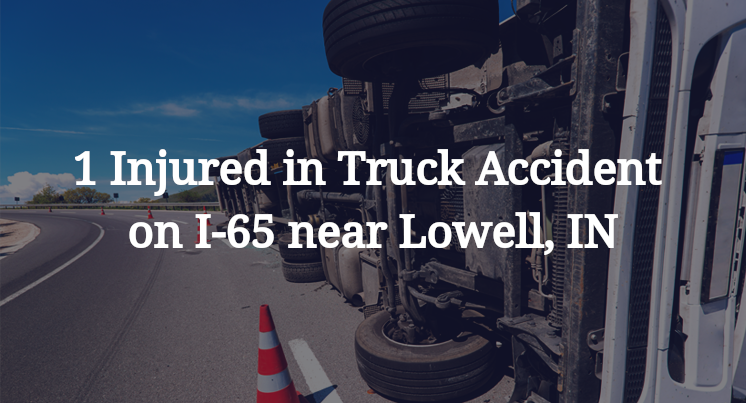
The driver, whose name has not been made public, managed to get out of the burning vehicle, according to authorities. The driver was hospitalized with non-life-threatening injuries after the crash.
Authorities said one of the truck’s steer tires failed before the crash.
The Lake County accident is still being investigated.
Commentary by Attorney Michael Grossman
When a semi-truck overturns and catches fire on a busy interstate, most people reading about it want answers. How could a professional driver lose control in a construction zone? Did something go wrong with the vehicle, or was human error to blame? And when authorities say a tire failed, does that mean the crash was just an unfortunate accident, or is someone responsible for that failure?
Authorities have mentioned that a steer tire failed before the crash, but that detail raises more questions than it answers. Tire failures don’t usually come out of nowhere. They can result from manufacturing defects, improper maintenance, overloading or road hazards, each pointing to different people who might bear responsibility.
For instance, if the tire had a manufacturing defect, the tire maker might be accountable. If it was underinflated or improperly inspected, the trucking company’s maintenance procedures come under scrutiny. And if the tire blew because of debris or poor road conditions in a construction zone, that opens the door to questions about the parties responsible for keeping the work zone safe.
We simply don’t know yet which of those explanations is correct. But the tire’s failure shouldn’t be treated as the end of the story; it’s the starting point for a proper investigation.
The report says the truck had just passed through a construction zone when it overturned. That raises a key unanswered question: Did anything about the construction zone contribute to the driver losing control? Were there uneven road surfaces, abrupt lane shifts or unclear signage? Was there any debris left in the roadway?
I’ve seen crashes where drivers were blamed at first, only for video evidence or road surveys to show that confusing lane markings or loose gravel created a dangerous situation that no driver could easily navigate. That’s why crash reconstruction experts often need to inspect the scene as soon as possible after the incident.
Another area that hasn’t been addressed publicly is what the truck’s black box or ECM (engine control module) might tell us. This data can show how fast the truck was going, whether the brakes were applied, how the steering wheel was positioned, and other clues about what happened in the moments leading up to the crash.
In addition, the truck may have had in-cab video or GPS records that provide even more context. And if distraction was a possible factor, cell phone records could help determine whether the driver was using their phone at the time.
Until investigators look at all of that evidence, it’s impossible to say with certainty what caused this crash.
Authorities say the driver was hospitalized but survived. That’s good news, but it’s also important to know more about the driver’s background and training. Was the driver properly trained to handle construction zones and steer tire blowouts? Was the company cutting corners in hiring or training drivers?
In one case I handled, the driver had been dismissed from multiple prior trucking jobs and was barely tested before being put behind the wheel. If a company puts an underqualified driver on the road, they may bear more responsibility than the driver who lost control.
Key Takeaways
- A failed steer tire may point to deeper issues like poor maintenance, manufacturing defects, or overloading.
- The impact of the construction zone on vehicle control remains an open question.
- ECM and dash cam data will be crucial in determining how and why the truck lost control.
- Investigators should examine the driver’s training and the trucking company’s safety practices.
- Finding out what really happened will require a thorough, evidence-based investigation, not just taking initial reports at face value.
 call us
 Email Us
 Text us