

Silver Spring Twp., PA — May 21, 2025, one person was injured in a sedan versus truck accident along Carlisle Pike (U.S. Highway 11).
According to authorities, the accident took place at the intersection of Carlisle Pike and Kost Road.
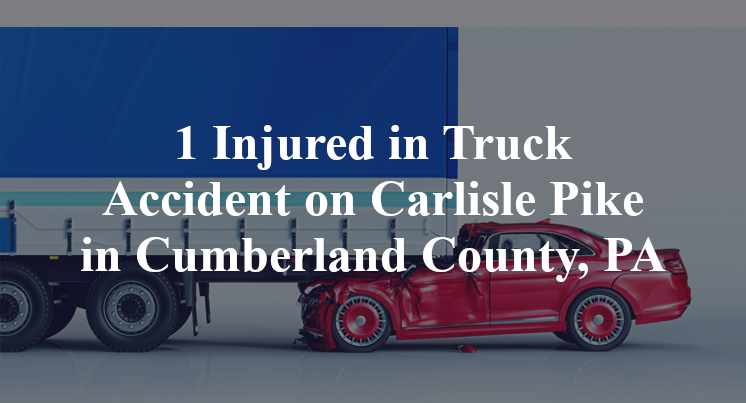
Details surrounding the accident remain scarce. Officials indicate that, for as yet unknown reasons, a collision took place between a white sedan and the trailer of an 18-wheeler. The sedan reportedly became wedged beneath the trailer and the person who had been inside it had to be extricated by emergency personnel. Once freed from the aftermath, they were transported to a local medical facility by EMS in order to receive necessary treatment for injuries incurred in the accident. Additional information pertaining to this incident—including the identity of the victim—is not available at this point in time. The investigation is currently ongoing.
Commentary by Attorney Michael Grossman
When a passenger vehicle ends up wedged beneath the trailer of an 18-wheeler, it’s not enough to say there was a collision. The real question is how it happened—and more specifically, why the trailer was positioned in a way that allowed a car to go under it in the first place.
According to initial reports, a white sedan became trapped under the trailer of a semi at the intersection of Carlisle Pike and Kost Road. That tells us something already: the crash happened at or near a crossing point, not on a high-speed highway. In that kind of setting, underride crashes like this often involve the trailer crossing into the path of oncoming or perpendicular traffic—sometimes during a turn, other times while backing across or into the road.
If the truck was turning across traffic or blocking a lane, was it properly lit and visible? Trailers have large surface areas that, under the wrong lighting conditions, can appear almost invisible—especially the white ones. Federal regulations require reflective tape and underride guards, but whether they were present and effective in this case is something investigators will need to determine.
Another key issue is whether the truck had a legal right to be where it was and whether it executed the turn or crossing maneuver safely. Did the truck block the lane too long? Was the turn too wide or too sharp? Did the driver fail to yield? I’ve seen cases where drivers misjudge timing or distance, and the result is that they leave a 40-foot trailer stretched across a live traffic lane. Drivers approaching that trailer, especially if the lighting or visibility is poor, may not have enough time to react—even if they’re doing everything right.
Beyond the scene itself, it’s worth asking what kind of training the truck driver received for executing low-speed turns in busy or complex intersections. Some companies throw new hires into local delivery routes without real preparation, assuming that slower speeds equal lower risk. But that’s not always how it plays out. A low-speed maneuver gone wrong can be just as dangerous as a highway crash, particularly when it results in an underride.
The bottom line is this: when a sedan ends up under a trailer, that’s not just a crash—it’s a failure of visibility, space management, or timing. And figuring out which one failed here will depend on a careful review of dash cams, trailer markings, lighting conditions, and driver behavior.
Key Takeaways
- The crash involved a sedan getting trapped under a trailer at an intersection, suggesting the truck may have been turning or blocking the lane.
- It’s unclear whether the trailer was properly marked, lit, or visible to the approaching driver.
- Investigators will need to assess whether the truck’s maneuver was safe and compliant with traffic laws.
- Driver training and company safety procedures could be relevant depending on how the trailer came to block the sedan’s path.
- A full investigation using dash cam footage, lighting conditions, and vehicle data is essential to determine what led to the underride.
 call us
 Email Us
 Text us