

Charleston, SC — April 3, 2025, one person was injured following a truck accident just after 8:00 a.m. along Savannah Highway.
According to authorities, the accident took lace on U.S. Highway 17 (Savannah Highway) in the vicinity of the Savage Road intersection.
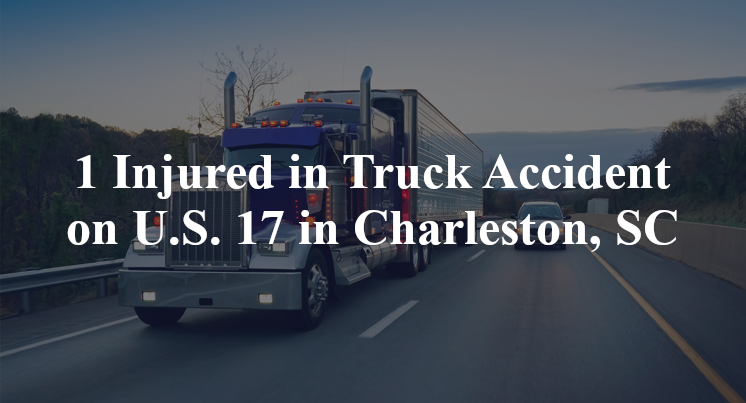
Details surrounding the accident remain scarce. Officials indicate that two separate vehicles were involved in the wreck: a pickup truck and an 18-wheeler. Reports state that one person reportedly suffered injuries of unknown severity, though they were described to have been non-life-threatening; they were transported to a local medical facility by EMS in order to receive necessary treatment. Additional information pertaining to this incident—including the identity of the victim—is not available at this point in time. The investigation is currently ongoing.
Commentary by Attorney Michael Grossman
Any time a crash involves both a pickup truck and an 18-wheeler, particularly during morning rush hour on a major road like Savannah Highway, it’s worth taking a closer look. While the injuries in this case were reportedly not life-threatening, the presence of a commercial truck in any collision raises questions about how the wreck happened—and whether it could have been avoided with better training, equipment, or oversight.
Right now, we don’t know much about the circumstances. Was one of the vehicles attempting a turn? Was traffic backed up and someone failed to stop in time? Did one vehicle change lanes improperly or fail to yield? Each of those scenarios has different legal implications, and they can’t be resolved just by looking at vehicle damage. Investigators will need to gather dashcam footage, witness statements, and vehicle data to get a clear picture of what led up to the crash.
If the 18-wheeler was being used for commercial purposes—and most are—then the trucking company’s role becomes part of the equation. Was the driver properly trained for urban driving conditions during peak traffic hours? Was the vehicle maintained in a way that ensured safe braking, visibility, and maneuverability? And just as important, was the driver operating under time pressure or a tight delivery window that could have encouraged riskier decisions behind the wheel?
It’s also worth asking how visible and predictable each vehicle was to the other. Early-morning crashes often involve changing light conditions, glare, or traffic congestion that limits reaction time. If either vehicle made an unexpected move or if visibility was compromised in some way, that could change the analysis of fault significantly.
From where I sit, even a crash that results in “only” minor injuries can still reveal serious issues—whether in training, equipment, or company policy. The goal in any investigation should be to go beyond assumptions and uncover what really happened. That’s the only way to hold the right parties accountable and ensure that those affected by the wreck receive the clarity and closure they deserve.
 call us
 Email Us
 Text us