

Carl Junction, MO — April 23, 2025, one person was injured in a truck accident at about 11:50 a.m. on County Road 290 at Route YY.
Authorities said a collision involving a car and a semi-truck hauling grain resulted in the truck being overturned in the road, while the car crashed into a ditch.
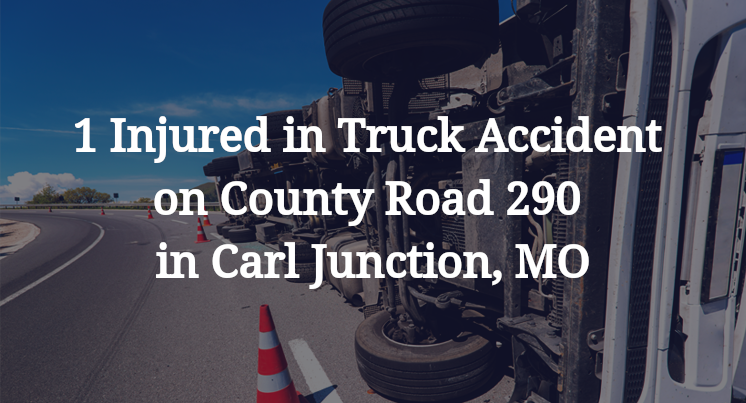
The driver of the car was hospitalized with unspecified injuries after the crash, according to authorities.
Authorities have not released any additional information about the Jasper County crash. The accident is still under investigation.
Commentary by Attorney Michael Grossman
When a semi-truck hauling grain overturns after a collision with a car, the legal investigation must start with who failed to yield or maintain control and whether either driver made a move that created an unavoidable situation. In this crash in Carl Junction, the fact that the truck overturned and the car ended up in a ditch suggests a violent impact that likely could have been prevented with more cautious driving.
At rural intersections like this one, visibility, right-of-way rules and proper speed are critical. Trucks hauling agricultural loads like grain are heavy, have a high center of gravity and require longer distances to slow down or maneuver safely. Commercial drivers are trained to understand that even small mistakes — like misjudging the speed of cross traffic or failing to come to a complete stop — can quickly turn dangerous, especially when hauling unstable or shifting loads.
The fact that the truck overturned is an important detail. Grain shifts easily inside trailers if the load isn’t properly secured or if a sudden maneuver, like swerving or hard braking, is made. That raises questions about whether the truck’s speed, the loading practices or the truck’s handling played a role in making the crash worse once contact occurred.
Investigators will want to pull the truck’s engine control module data to determine its speed, braking and throttle activity in the seconds before the crash. That information will help show whether the truck driver was operating cautiously as he approached the intersection, or whether he was moving too fast to safely avoid a collision. At the same time, they’ll need to establish whether the car driver failed to yield, pulled into the truck’s path or otherwise contributed to the crash.
Another important element is road design. Were there stop signs, yield signs or other traffic control devices at the intersection? Was visibility limited by buildings, vegetation or road curves? Those details could help explain whether either driver had enough time and warning to react appropriately.
The larger point here is that crashes between trucks and passenger vehicles at rural intersections are rarely blameless. Commercial drivers are expected to maintain greater caution, especially when hauling loads that can compromise vehicle stability. Passenger vehicle drivers must recognize the difficulty trucks face in stopping or swerving and give them extra space.
When a crash like this results in a truck overturning and a person being hospitalized, the investigation must focus on whether basic rules of right-of-way, safe speed and vehicle control were followed. Because in rural areas just as much as on busy highways, everyone shares responsibility for keeping the road safe, and when that duty is broken, people get hurt.
 call us
  Email Us
  Text us