

McHenry County, IL — June 1, 2025, a man was injured following a truck accident at approximately 2:30 p.m. along State Highway 173.
According to authorities, the accident took place in the vicinity of the S.H. 173 and Crowley Road intersection.
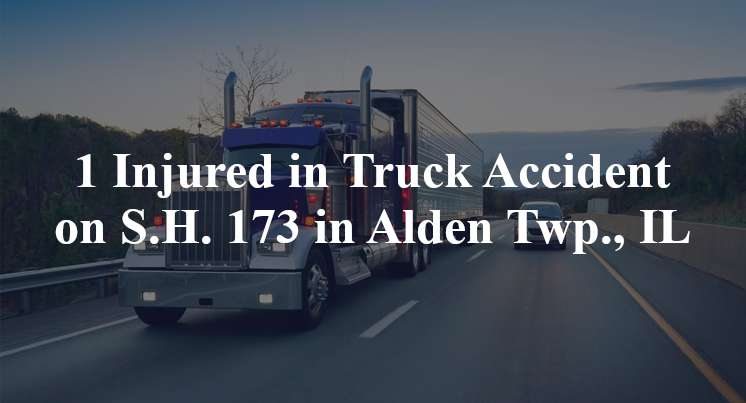
Details surrounding the accident remain scarce. Preliminary reports state that, for as yet unknown reasons, a collision took place between an SUV and an 18-wheeler.
The SUV ended up crashing into a tree line and the man who had been behind the wheel was apparently entrapped in the wreckage, according to reports; he had to be extricated by emergency personnel. Once freed from the aftermath, he was flown to an area medical facility in order to receive necessary treatment for the injuries he incurred over the course of the accident.
Additional information pertaining to this incident—including the identity of the victim—is not available at this point in time. The investigation is currently ongoing.
Commentary by Attorney Michael Grossman
When people read about a collision between an SUV and an 18-wheeler that leaves one person trapped and airlifted to the hospital, they naturally want to know: How did this happen? Who’s responsible? And maybe more importantly, how can we be sure the public is getting the full story?
From what’s currently known, the crash happened on a Saturday afternoon at the intersection of State Highway 173 and Crowley Road in McHenry County, Illinois. Beyond that, details are thin. Authorities say a collision occurred between an SUV and an 18-wheeler, but they haven’t said who crossed into whose path or how the crash unfolded. The SUV driver ended up in a wooded area and had to be extricated from the wreckage—a strong indication of serious damage and likely high impact.
What the public hasn’t been told yet is whether the truck was in motion, turning, stopped, or possibly even parked. Each of those scenarios points to a different chain of responsibility. For example, if the truck was pulling out into traffic, the key question is whether the driver did so safely. If the SUV crossed into the truck’s path, that’s an entirely different inquiry. Without those basic facts, it’s impossible to draw firm conclusions—and that’s precisely why a deeper investigation is critical.
In truck crash litigation, one of the first things I look for is electronic evidence. Most commercial trucks today are equipped with engine control modules (ECMs) that function like a black box, recording speed, braking, and other vehicle activity leading up to the crash. If the truck had in-cab cameras or if the driver was using a phone, those data points could be crucial in establishing whether human error, distraction, or fatigue played a role.
It’s also fair to ask whether this driver should have been behind the wheel at all. In my experience, I’ve seen cases where drivers with a history of violations were put back on the road with little to no vetting. In one case I litigated, a driver who had been fired multiple times was hired again after passing a joke of a road test—twenty minutes long, during the daytime, in clear weather. That driver later caused a crash that ended a life.
So while this McHenry County crash is still under investigation, what’s already clear is that there are a number of unanswered questions—ones that only a thorough, independent investigation can address. Evidence from the scene, data from the truck, driver history, and corporate practices all play a role in making sure the right people are held accountable.
Key Takeaways:
- The cause of the SUV/18-wheeler collision in McHenry County is still unknown, and key facts have not been released.
- Critical evidence like ECM data, in-cab video, and driver phone records could clarify how the crash happened.
- It’s important to scrutinize not just driver behavior but also the trucking company’s hiring and training practices.
- A proper investigation looks beyond surface-level facts to determine who really bears responsibility.
- Accountability only comes after gathering and analyzing all available evidence.
 call us
 Email Us
 Text us