
Scurry County, TX — October 16, 2025, Theresa martin was killed and Daniel Martin was injured due to a motorcycle versus car accident along U.S. 84.
According to authorities, 55-year-old Daniel Martin and 50-year-old Theresa Martin were traveling on a northbound motorcycle on U.S. 84 in the vicinity in the vicinity of the Ennis Creek Road intersection.
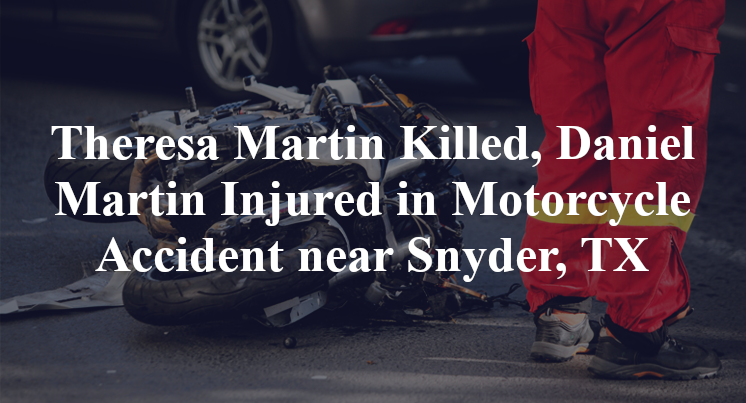
A northbound SUV which had allegedly recently entered the highway was travelling in the left lane. Officials indicate that, for reasons yet to be confirmed, the motorcycle collided with the rear-end of the SUV.
Theresa Martin reportedly suffered fatal injuries and was declared deceased at the scene. Daniel Martin sustained serious injuries, as well, and was transported to a local medical facility by EMS in order to receive necessary treatment. No other injuries have been reported. Additional details pertaining to this incident are not available at this point in time. The investigation is currently ongoing.
Commentary by Attorney Michael Grossman
After any severe crash, especially one involving motorcycles, there’s a natural impulse to search for immediate answers. But in the noise of early reporting and assumptions, critical questions often go unasked. Understanding what really happened takes more than just a quick glance at the wreckage—it requires intentional, detailed inquiry.
1. Did the authorities thoroughly investigate the crash?
Rear-end collisions between motorcycles and larger vehicles raise obvious concerns about spacing, visibility, and relative speeds. But determining the exact sequence of events demands more than those surface-level observations. Were crash investigators able to laser-map the scene or reconstruct the path of each vehicle before impact? Did they examine whether the SUV’s entry onto the highway was abrupt or predictable? In many cases, the depth of the investigation depends heavily on the training and tools available to local responders. Unfortunately, not all jurisdictions have the same level of crash reconstruction resources, and that disparity can leave major gaps in understanding what truly led to the collision.
2. Has anyone looked into the possibility that a vehicle defect caused the crash?
When a motorcycle strikes the rear of another vehicle, most jump to conclusions about rider error. But that thinking overlooks a key question—was the motorcycle functioning properly? A sudden brake failure, throttle issue, or sensor malfunction could prevent a rider from slowing down in time, especially if the SUV merged unexpectedly. On the other side, it’s worth considering whether the SUV’s brake lights were operational. Mechanical inspections on both vehicles are essential, yet they’re often skipped unless someone pushes for it.
3. Has all the electronic data relating to the crash been collected?
Modern motorcycles and SUVs alike often carry onboard systems capable of recording speed, throttle, and braking behavior. Beyond that, dashcams, traffic cameras, and even the riders’ or drivers’ phones might contain valuable clues. Did investigators check for that kind of data? Even a five-second window of recorded action can verify or challenge early assumptions, especially in cases where one party can’t speak for themselves. Gathering that kind of evidence quickly is vital—it doesn’t sit on the devices forever.
When lives are lost or changed forever, it’s not enough to settle for surface explanations. Asking deeper questions—about the thoroughness of the investigation, the possibility of vehicle failure, and the presence of digital evidence—can be the difference between closure and confusion.
Key Takeaways:
- Surface-level crash reports often miss important investigative steps.
- Mechanical issues in either vehicle may have played a role and should be ruled out.
- Digital data from the vehicles or nearby cameras could reveal what really happened.

 call us
  Email Us
  Text us