

El Paso, TX — September 28, 2025, Rene Anzures was injured due to a truck accident just before 1:15 a.m. along U.S. Highway 54, Patriot Freeway.
According to authorities, 31-year-old Rene Anzures was traveling in a southwest bound Chevrolet Silverado pickup truck on U.S. 54 in the vicinity of Sean Haggerty Drive when the accident took place.
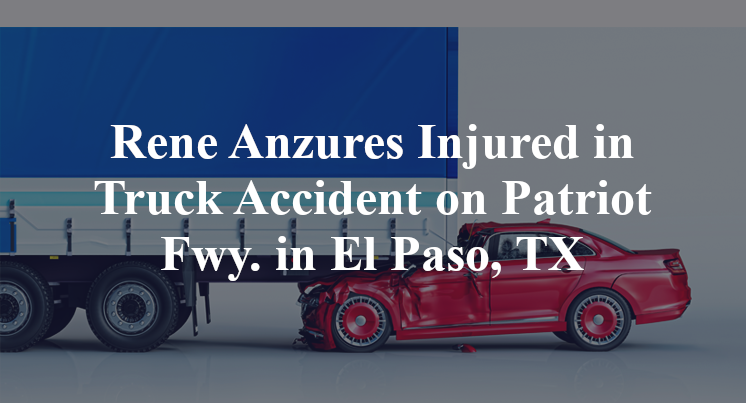
Officials indicate that, for reasons yet to be confirmed, the Silverado collided with the rear-end of an International 18-wheeler. Anzures reportedly sustained serious injuries over the course of the accident. It does not appear that anyone else was hurt. Additional details pertaining to this incident are not available at this point in time. The investigation is currently ongoing.
Commentary by Attorney Michael Grossman
When a pickup truck rear-ends an 18-wheeler in the early morning hours, the immediate question is usually about visibility and awareness—did the driver of the pickup have a clear and fair opportunity to avoid the truck ahead? And if not, why not?
Rear-end collisions often lead to assumptions about the trailing vehicle being at fault. But with commercial trucks, there are additional factors that need to be examined—especially when the crash happens around 1:15 a.m., when darkness, fatigue, and low visibility can all come into play.
One possibility is that the 18-wheeler was slowing or stopped in the travel lane. If that’s the case, investigators will need to look closely at whether the truck was operating legally and visibly. Were its taillights and hazard lights working? Was it moving at an appropriate speed for traffic flow? And if it was stopped, was it due to a breakdown—or something more preventable?
If the truck was moving normally and the pickup still failed to slow in time, then attention turns to driver behavior. Was Mr. Anzures fatigued? Distracted? Driving too fast for conditions? Investigators will need ECM data, cell phone records, and possibly toxicology reports to sort out whether driver impairment or inattention contributed to the crash.
Even though this was a rear-end impact, determining how much warning the pickup driver had—and whether the truck created an avoidable hazard—is central to assigning responsibility. A truck traveling at night must be clearly visible and safely operated at all times. If that standard wasn’t met, fault may not rest solely with the driver who hit it.
Key Takeaways:
- The core issue is whether the 18-wheeler was moving safely and visibly at the time of the crash.
- Rear-end collisions with large trucks often involve reduced visibility, sudden speed changes, or mechanical issues.
- Investigators will need ECM data, cell phone records, and lighting inspections to understand each driver’s role.
- Just because a pickup rear-ended a semi doesn’t automatically mean the pickup driver was at fault.
- Evidence will be key to showing whether either driver created a hazard that could—and should—have been avoided.
 call us
 Email Us
 Text us