

Columbus, OH — November 3, 2025, one person was killed in a truck accident at about 4:30 a.m. on an exit ramp for Interstate 71 at Gemini Place.
Authorities said a southbound BMW SUV crashed into the back of a semi-truck after briefly exiting the right side of the road, causing the SUV to catch fire.
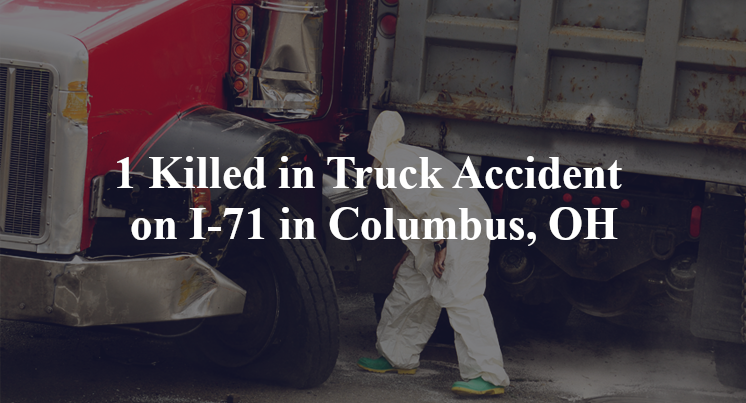
The BMW driver, whose name has not been made public yet, died at the scene of the crash, according to authorities.
No other injuries were reported.
Authorities have not released any additional information about the Franklin County crash at this time. The accident is still under investigated.
Commentary by Attorney Michael Grossman
When people read about a crash like this, an SUV slamming into the back of a semi-truck on an interstate ramp in the early morning hours, they often wonder: How does something like this happen? Was the truck parked or moving? Was it where it was supposed to be? And what role, if any, did visibility, speed or lighting conditions play?
Those are all reasonable questions. And right now, we don’t have clear answers.
According to early reports, the SUV “briefly exited” the right side of the road before crashing into the back of the truck. Depending on whether the truck was moving or stopped, different questions arise. If the truck was parked on or near the ramp, we’d want to know if it had its hazard lights on. Were its reflective triangles properly deployed? Was it legally allowed to stop there at all? On the other hand, if the truck was moving slowly, was it merging onto or off the ramp in a way that surprised the SUV driver?
Another thing to consider is the time of day: this happened at around 4:30 a.m. That’s a time when lighting and fatigue can both come into play. If visibility was poor, was the rear of the trailer adequately lit and marked? I’ve handled cases where trailer lighting was either broken or obscured, making the back of a trailer practically invisible until it was too late. Even under normal conditions, a poorly marked trailer can blend into the background, especially on an unlit ramp.
Then there’s the condition of the SUV itself. Did a mechanical failure or distraction cause the vehicle to leave the road before the crash? These are the kinds of things an investigation has to explore; not just what happened, but why.
And in truck accident cases, that means going beyond just eyewitness accounts. The most reliable evidence usually comes from the truck itself: black box data, dash cam footage, driver logs and cell phone records. I’ve handled cases where a trucking company’s hiring decisions turned out to be just as important as what the driver did in the moment. For instance, a driver’s record might show a pattern of unsafe driving, but the company hired him anyway. That kind of negligence can play a huge role in determining who’s ultimately responsible.
At this stage, all we know for certain is that a person lost their life and the truck was involved. Everything else — whether the truck driver followed the rules, whether the SUV was functioning properly and whether either vehicle could have avoided the collision — remains an open question. The only way to get answers is through a thorough investigation, backed by hard evidence.
Key Takeaways:
- It’s not yet clear whether the semi-truck was moving or stationary at the time of the crash, which is critical to understanding what went wrong.
- Investigators will need to look at ECM data, dash cam footage and the truck’s lighting and hazard signals to determine fault.
- Ramp conditions, visibility, and driver behavior at 4:30 a.m. are all likely factors worth investigating.
- Black box data and company records may shed light on whether the truck was operated or maintained properly.
- Determining who’s responsible requires more than speculation. It requires evidence.
 call us
 Email Us
 Text us