

Sedgwick County, KS — October 10, 2025, one person was injured due to a multi-vehicle truck accident sometime before 2:15 p.m. along Interstate Highway 235.
According to authorities, the accident occurred in the northbound lanes of I-235 in the vicinity of 25th Street.
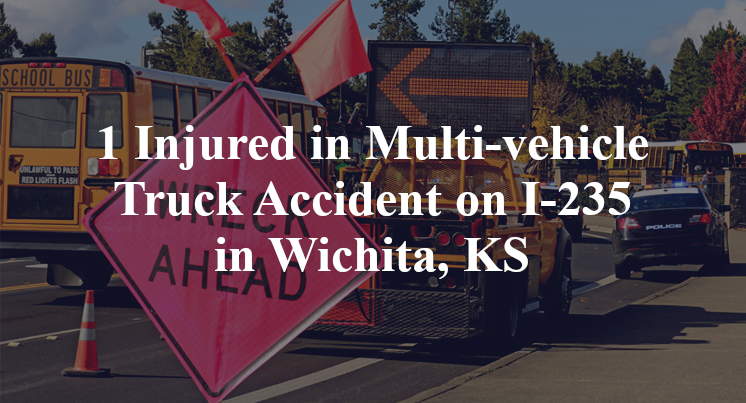
Details surrounding the accident remain scarce. Officials indicate that, for as yet unknown reasons, a collision occurred between a sedan, a concrete mixer truck, and an 18-wheeler. One person reportedly sustained serious injuries over the course of the accident. Additional information pertaining to this incident—including the identity of the victim—is not available at this point in time. The investigation is currently ongoing.
Commentary by Attorney Michael Grossman
When multiple commercial vehicles are involved in the same crash—especially on a high-speed roadway like I-235—the focus shouldn’t just be on who hit whom. The real question is what chain of decisions and reactions led to the collision, and whether one or more drivers had the opportunity to prevent it.
With both a concrete mixer and an 18-wheeler involved, the potential for blind spots, slow braking, and limited maneuverability increases significantly. These are heavy, often cumbersome vehicles that require greater following distances and earlier braking. If one of them stopped suddenly or failed to account for the flow of traffic ahead, it could have triggered a chain reaction. That’s exactly the type of scenario where engine control module (ECM) data, dash cam footage, and witness statements become vital.
It also matters what lane each vehicle was in, whether one was merging or exiting, and whether traffic was flowing smoothly or already slowing due to congestion or construction. Even a brief lapse in attention—by any of the drivers—can have devastating consequences when large trucks are involved.
In multi-vehicle crashes, it’s common to see blame shift between parties. One driver might have made the initial error, but another might have failed to respond appropriately. That’s why it’s crucial to analyze braking patterns, turn signals, and the timing of each driver’s actions. From a legal standpoint, responsibility isn’t always all-or-nothing—it can be divided based on how each party contributed to the outcome.
The companies behind these commercial vehicles should also be looked at closely. Were the drivers properly trained to operate in high-traffic conditions? Were they under time pressure that discouraged caution? Did the trucks have working cameras or advanced warning systems? These are the kinds of background issues that don’t show up in a crash report—but often explain how a preventable wreck became unavoidable.
Key Takeaways:
- The crash likely involved a chain of actions between multiple vehicles, not a single point of failure.
- ECM data, dash cams, and braking records are essential for understanding each vehicle’s role in the collision.
- Road conditions, lane changes, and traffic flow should be factored into any meaningful analysis.
- Responsibility may be shared among drivers depending on how each responded—or failed to respond—in time.
- Trucking company oversight, scheduling, and training practices could be just as important as driver behavior.
 call us
 Email Us
 Text us