

Smith County, TX — July 22, 2025, One person was killed following a motorcycle accident that occurred sometime Tuesday on HIghway 64 E.
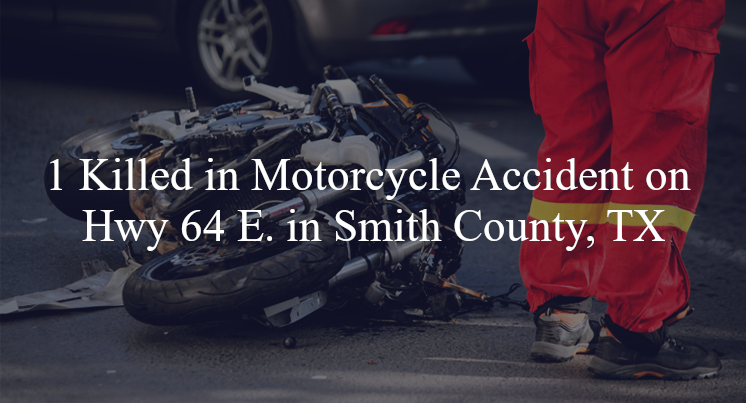
According to reports, a motorcycle was traveling on Highway 64 E. at the Wolfe Lane intersection when a Jeep failed to yield the right-of-way and turned in front of the motorcycle, resulting in a collision.
When first responders arrived at the scene they found that a third vehicle, a Honda that was stopped at the intersection, was also impacted during the accident. The motorcyclist was found to have sustained fatal injuries and they were pronounced deceased. No other injuries were reported, and officials have not released an update on the investigation’s status.
Commentary by Attorney Michael Grossman
When a motorcycle is hit by a vehicle turning across its path, the consequences are usually immediate and severe. But assigning blame isn’t the same as understanding how the crash happened—or whether it could have been prevented on more than one level.
1. Did the authorities thoroughly investigate the crash?
Crashes involving motorcycles and turning vehicles demand precise scene documentation. Investigators should have mapped the positions of all three vehicles, reviewed timing and line of sight, and determined the speed of the motorcycle at impact. Just because one vehicle failed to yield doesn’t mean the full sequence is understood. If that kind of reconstruction wasn’t done, the investigation may be missing key context—especially about how quickly the situation unfolded.
2. Has anyone looked into the possibility that a vehicle defect caused the crash?
When a driver fails to yield, mechanical issues like brake problems or delayed throttle response could be factors. If the Jeep had any defects that made it harder to stop or accelerate safely, that could explain why it ended up in the motorcycle’s path. Similarly, if the motorcycle experienced a system failure just before the crash, it might have limited the rider’s ability to evade. Without mechanical inspections, those possibilities stay unexamined.
3. Has all the electronic data relating to the crash been collected?
Both the Jeep and Honda likely contain onboard systems that can reveal speed, brake input, and driver behavior. Even though the motorcycle likely didn’t carry such data, witness devices, dash cams, or nearby surveillance could fill in the timeline. That kind of data is critical when determining whether the turn was made recklessly—or if the driver misjudged speed or distance. If none of that evidence was collected, investigators are left to guess at critical moments.
Crashes like this don’t start and end with the point of impact. They start with a question: why wasn’t the motorcyclist seen or avoided in time?
Takeaways:
- Multi-vehicle crashes involving motorcycles require exact scene mapping to understand timing and movement.
- Mechanical failures in either vehicle must be ruled out to ensure fault is properly assigned.
- Onboard data and external cameras can help reconstruct the decision-making moments that led to the crash.
 call us
 Email Us
 Text us