
Fort Worth, TX — April 18, 2025, Seventeen people were injured following a motorcycle accident that occurred around 8:45 P.M. on I-35W.
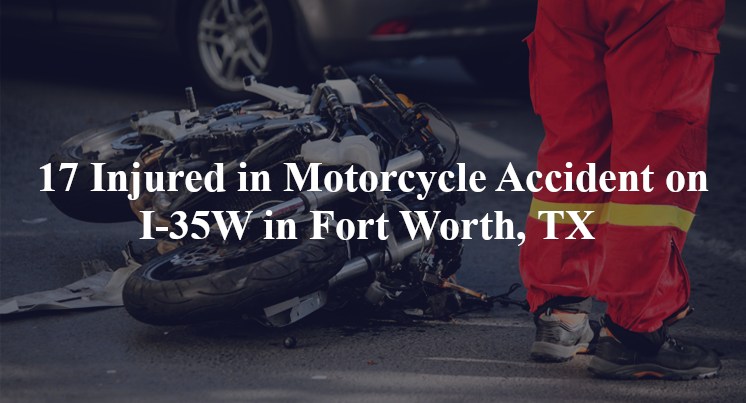
An investigation is underway into a car accident that left 17 people injured during the evening hours of April 18th. According to official reports, a a group of 15 motorcycle were traveling in the area of I-35W and the Presidio Shopping Center when for unknown reasons the tire of the lead motorcycle had a blowout, causing it to lose control and cause a chain reaction style crash.
When first responders arrived on the scene, they found that seventeen people had sustained injuries, fourteen of them seriously, and they were transported to the hospital. At this time there has been no further information released about the accident, including the identities and status of those involved, however this remains an ongoing investigation and more details may be released in the future.
Commentary by Attorney Michael Grossman
Whenever a large group of riders is involved in a crash, especially one with this many injuries, it’s easy to focus on the scale and severity of the incident. But what often gets missed in the aftermath is a deeper look into why the crash occurred and whether every contributing factor has been fully examined. In a case like this—where an apparent tire blowout on a lead motorcycle reportedly set off a chain reaction—there are three essential questions that must guide the investigation if we want to truly understand what happened.
The first is whether authorities conducted a thorough investigation. Managing a crash scene involving over a dozen motorcycles and nearly 20 injured individuals is a significant challenge. In that kind of chaos, investigators must work methodically to reconstruct what happened, even if the cause seems obvious. Initial impressions—like a tire blowout—can be helpful starting points, but they don’t replace the need for physical evidence collection, interviews with witnesses, and detailed mapping of how the crash unfolded. It’s also critical to account for environmental factors, traffic conditions, and the mechanical condition of all the vehicles involved. Without that level of detail, key aspects of what caused the crash may never come to light.
The next question is whether anyone has looked into the possibility that a defect played a role. In this case, reports indicate that a tire failure on the lead motorcycle may have initiated the crash. That raises serious concerns about the integrity of the tire—was it properly maintained, or did it fail despite being in good condition? Tire defects can originate from manufacturing flaws, design weaknesses, or even improper installation. These issues are often missed in routine investigations unless someone takes steps to preserve the damaged tire and submit it for forensic evaluation. It’s not enough to assume a blowout was random; that component needs to be tested to determine why it failed.
Lastly, has all the electronic data from the crash been collected? While motorcycles don’t typically contain the same black box technology found in passenger vehicles, some newer models are equipped with electronic control modules (ECMs) that can record speed, throttle input, and other valuable data. Additionally, many riders use helmet cams or aftermarket devices that could hold video footage of the incident. Beyond the motorcycles themselves, traffic cameras and surveillance footage from nearby businesses may also help investigators reconstruct the crash. These sources can provide invaluable context—but only if someone secures them before they’re overwritten or lost.
Large-scale crashes like this leave behind more than wreckage—they leave behind questions that deserve real answers. Understanding why this chain-reaction crash happened means digging deeper than surface-level explanations. By ensuring that these three critical questions are addressed, we give those involved and their families the best chance at understanding what really went wrong.

 call us
  Email Us
  Text us