

Arlington, TX — March 19, 2025, One person was killed following a motorcycle accident that occurred at around 2:00 P.M. on South Cooper Street.
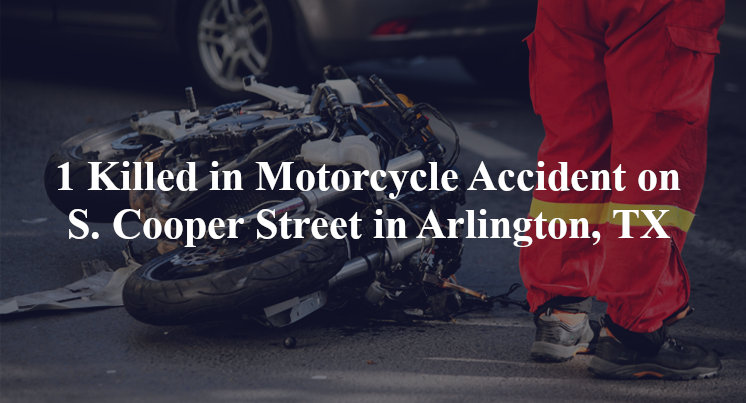
An investigation is underway into a car accident that left one person dead during the afternoon hours of March 19th. According to official reports, a 20-year-old man was travelling on a motorcycle in the northbound lanes of South cooper Street at the Wimbledon Drive intersection at the same time that a Honda Accord was turning onto Wimbledon from Cooper and the two vehicles collided, ejecting the motorcyclist.
When first responders arrived on the scene, they found that the driver of the motorcycle had sustained fatal injuries and was pronounced deceased. At this time there has been no further information released about the accident, however this remains an ongoing investigation and more details may be released in the future.
Commentary by Attorney Michael Grossman
When a young motorcyclist loses their life in a crash like the one reported at the intersection of South Cooper Street and Wimbledon Drive, it’s natural to want quick answers. But in my experience, the only way to truly understand what happened is to slow down and ask the right questions—questions that go beyond the surface details. According to initial reports, a 20-year-old man on a motorcycle was traveling northbound on South Cooper Street when a Honda Accord, turning onto Wimbledon, crossed his path. The resulting collision ejected the motorcyclist, who was later pronounced deceased at the scene. As the investigation unfolds, there are three critical questions that should guide how we evaluate this incident: Did the authorities thoroughly investigate the crash? Has anyone looked into whether a vehicle defect contributed to it? And has all electronic data from the crash been collected?
Starting with the investigation, intersection crashes often involve a mix of human judgment, timing, and visibility—none of which are always easy to assess without a detailed analysis. Was the Honda driver able to see the motorcycle clearly? Did the motorcycle have the right of way? Were either party speeding or attempting to beat a light? These are the kinds of questions investigators need to answer with scene measurements, crash reconstruction, and video surveillance where available. But the reality is, the depth of these investigations depends heavily on the training and bandwidth of the responding agency. If key evidence—like skid marks, debris patterns, or witness statements—is missed or not preserved, it may never be possible to fully understand what happened.
The second question—whether a vehicle defect contributed to the crash—is one that often gets overlooked. Motorcycles, while more exposed, are still machines that can fail. Brake issues, throttle problems, or even faulty lights can play a significant role in how a crash unfolds. The same applies to the Honda Accord—steering problems, brake malfunctions, or visibility defects may have played a part. Unfortunately, once the vehicles are removed from the scene and repairs or disposal begin, the opportunity to conduct a thorough mechanical inspection can quickly vanish. That’s why it’s vital to preserve both vehicles long enough for experts to examine them if needed.
Finally, we need to ask whether the relevant electronic data has been secured. Many vehicles today, including the Honda Accord, are equipped with electronic control modules (ECMs) that record critical information such as speed, braking, and steering inputs just before a collision. This data can help determine whether the driver of the Honda attempted to brake or swerve before impact. While motorcycles may not carry ECMs in the same way, some do have data-logging devices or aftermarket systems, and the motorcyclist’s phone or helmet cam, if present, could contain vital context. Cell phone records from both drivers could also show whether distraction was a factor. All of this information is time-sensitive and should be preserved as early as possible.
At the end of the day, a young man lost his life, and while that fact alone is heartbreaking, what his family deserves now are answers. That begins by making sure the right questions are asked—and that those questions lead to real evidence, not assumptions. A thorough investigation, careful consideration of possible defects, and the collection of all electronic data are the only ways to ensure that those affected are given the full picture of what happened and why.
 call us
 Email Us
 Text us