

Smith County, TX — August 16, 2024, Mason Crocker and two others were injured in a motorcycle versus car accident just after 6:00 p.m. on Interstate Highway 20.
According to authorities, 19-year-old Mason Crocker was traveling on an eastbound Honda motorcycle on the I-20 service road at the C.R. 411 intersection when the accident took place.
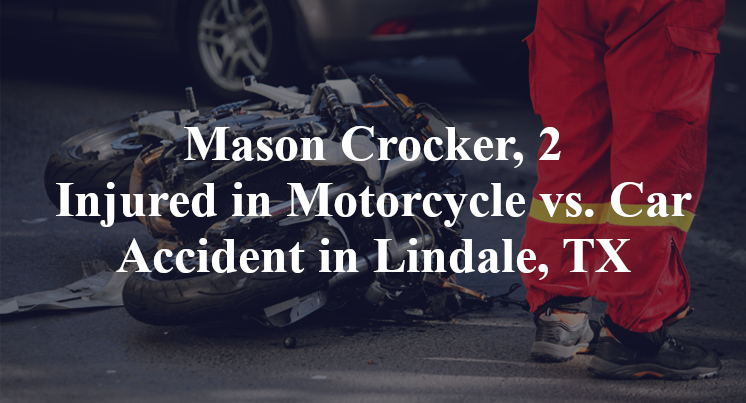
Officials indicate that, for as yet unknown reasons, a northbound Toyota Corolla entered the intersection at an apparently unsafe time, failing to yield the right-of-way at a stop sign. A collision consequently occurred between the front-left side of the Corolla and the front-end of the motorcycle.
Crocker reportedly sustained serious injuries due to the collision. Both occupants of the Corolla suffered minor injuries, as well, reports state. Additional details pertaining to this incident are not available at this point in time.
Commentary by Attorney Michael Grossman
When a motorcyclist is seriously hurt in a collision with a car that reportedly failed to yield, it’s easy to zero in on a missed stop sign. But there’s often more to understand than who had the right-of-way. These crashes deserve closer scrutiny—especially when injuries are severe.
1. Did the authorities thoroughly investigate the crash?
A crash involving a stop sign violation and a vulnerable road user like a motorcyclist should prompt a full reconstruction. Did investigators review sight lines, measure stopping distances, and determine how long the Corolla was in the intersection before impact? Did they document the motorcycle’s position and reaction window? Without mapping those details, conclusions about fault or timing are mostly assumptions—and serious injuries deserve more than guesswork.
2. Has anyone looked into the possibility that a vehicle defect caused the crash?
If the Toyota Corolla entered the road at the wrong time, a driver mistake is one possibility—but not the only one. Mechanical failure like delayed acceleration, stuck throttle, or steering malfunction could explain a sudden or misjudged movement. Likewise, if the motorcycle’s brakes or handling systems didn’t respond properly, that could have worsened the outcome. These are the kinds of questions that only a post-crash vehicle inspection can answer—if it happened in time.
3. Was all the electronic data relating to the crash collected in time?
Both the Corolla and the Honda motorcycle may have recorded key data points—speed, brake use, throttle input, and steering direction—in the moments before the crash. That information could clarify whether the Corolla rolled through the stop or entered abruptly, and how the motorcycle responded. Phone usage and potential nearby surveillance video could also support or contradict witness accounts. But any of that evidence had to be preserved quickly, or it’s likely long gone by now.
For a crash that left a young rider seriously injured, surface-level facts won’t cut it. Understanding what really happened means asking sharper questions—and making sure the right steps were taken to get reliable answers.
Takeaways:
- Motorcycle crashes involving stop sign violations require full scene analysis to confirm timing and movement.
- Mechanical problems in either vehicle may explain poor judgment or failure to respond.
- Pre-crash data from vehicle systems can clarify events—if it was collected early enough.
 call us
 Email Us
 Text us