

Iredell County, NC — October 16, 2025, Kimberly Cox was killed and Daniel Heisig was injured following an 18-wheeler accident around 8:30 p.m. on I-77.
Investigators said that the accident happened near Exit 49 along southbound lanes of the interstate outside of Statesville.
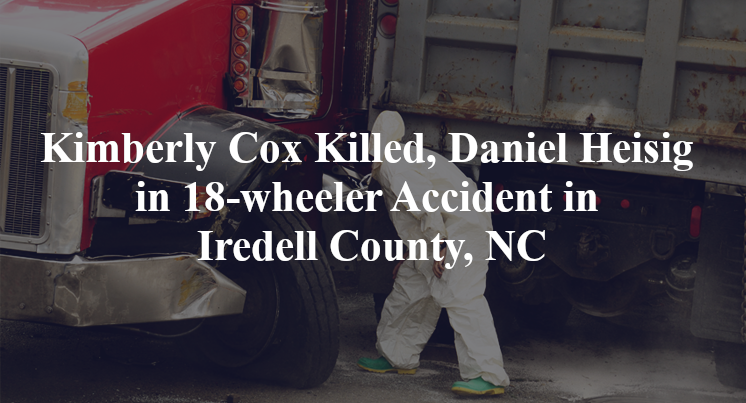
Authorities said that 40-year-old Daniel Lawrence Heisig and 60-year-old Kimberly Taylor Cox were in an SUV that was stopped on the interstate due to traffic. Approaching that traffic, authorities said that an 18-wheeler failed to stop, and it crashed into the SUV.
Due to the accident, Kimberly Cox was killed. Daniel Heisig reportedly was injured. At this time, no other injuries have been reported. No charges or citations have been reported at this time. The accident remains under investigation.
Commentary by Attorney Michael Grossman
When an 18-wheeler slams into stopped traffic on the interstate, most people’s first question is “What did the truck driver do?” But often the more important question is: Why didn’t the truck stop?
There’s no shortage of potential reasons. Was the truck driver distracted? Tired? Traveling too fast for conditions? And beyond the driver, what role did their employer play? Was the company pressuring drivers to stay on the road too long? Did they fail to provide adequate training? Was the driver someone who shouldn’t have been behind the wheel due to past behavior? Were there known issues with the truck’s brakes or other maintenance issues?
These are the kinds of questions that too often go unanswered. In my experience handling hundreds of commercial vehicle accident cases, the deeper answers come from looking into things like the truck’s electronic control module (ECM), driver logs, cell phone records, and a carrier’s safety history. That’s where investigations start to uncover not just the immediate cause of a crash but the series of decisions that allowed that cause to happen unchecked.
Crashes like this rarely happen out of nowhere. Could this crash be that one-in-a-million, unavoidable crash? Sure, and investigations should be thorough enough to at least rule that out. But when a massive commercial truck fails to stop, and people lose their lives, a proper investigation needs to dig beyond the surface and consider that this all started before the truck driver even got behind the wheel.
Key Takeaways
- The real question in rear-end truck crashes is not just what happened, but why.
- Driver error is often just one part of the puzzle—fatigue, distraction, and employer pressure are common contributing factors.
- Employer practices, including training, scheduling, and equipment maintenance, deserve close scrutiny.
- Critical evidence like ECM data and dispatch logs can help reveal whether this was an isolated mistake or part of a larger pattern.
- Full accountability means investigating both the driver’s actions and the trucking company’s role.
 call us
 Email Us
 Text us