

Bexar County, TX — July 30, 2024, Juan Bishop was injured due to a motorcycle versus car accident just before 7:00 p.m. along Southeast Military Drive.
According to authorities, 51-year-old Juan Bishop was traveling on an eastbound Harley-Davidson motorcycle on Southeast Military Drive at the Quintard Street intersection when the accident took place.
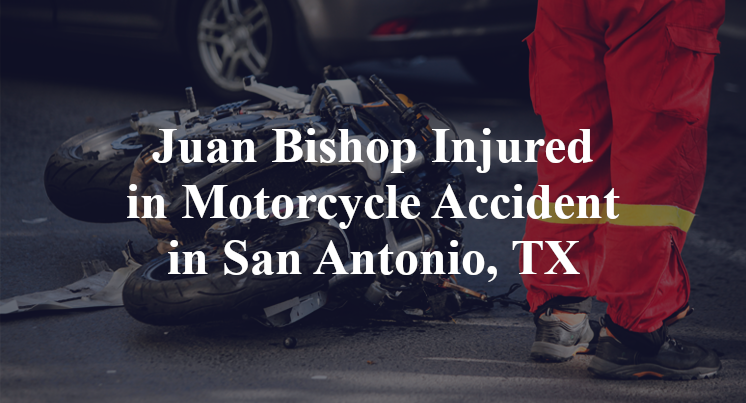
Officials indicate that, for as yet unknown reasons, a westbound Honda Civic attempted a left turn into a private parking lot at an apparently unsafe time, failing to yield the right-of-way to oncoming traffic. A collision consequently occurred between the front-end of the motorcycle and the right side of the Honda.
Bishop reportedly sustained serious injuries over the course of the accident; he was transported to a local medical facility by EMS in order to receive necessary treatment. No other injuries have been reported. Additional details pertaining to this incident are not available at this point in time.
Commentary by Attorney Michael Grossman
Any time a motorcycle collides with a turning vehicle, there’s a natural tendency to see it as just another driver “not seeing” the rider. But that kind of shorthand thinking can miss the bigger picture—especially when someone ends up seriously hurt.
1. Did the authorities thoroughly investigate the crash?
Crashes like this depend heavily on precise timing. Did investigators measure sight distances, vehicle paths, or the angles of impact? Did they speak with independent witnesses to confirm how far the motorcycle was from the intersection when the Civic began its turn? Without reconstructing how and when each vehicle entered the intersection, it’s hard to know whether the turn was misjudged, rushed, or a complete failure to yield.
2. Has anyone looked into the possibility that a vehicle defect caused the crash?
A Civic making an unsafe left turn raises the question: was it a judgment error, or did something on the vehicle contribute? Faulty turn signals, steering problems, or brake issues could’ve made the maneuver riskier than it should’ve been. And on the Harley-Davidson, were the headlights and brake lights working as intended? Riders rely heavily on visibility, and any equipment failure—no matter how small—can turn a manageable situation into a high-impact one. If no one inspected the vehicles, those factors may have gone unnoticed.
3. Has all the electronic data relating to the crash been collected?
While the Civic likely had a crash data recorder, the motorcycle might not. But any available digital evidence—like speed, throttle position, or braking behavior—could clarify whether either party tried to avoid the crash. Surveillance footage from nearby businesses might also help show the sequence and distance between the vehicles. If that kind of evidence wasn’t gathered early on, it may already be gone.
Motorcycle crashes in intersections are often explained in a few words—but they deserve more than that. Getting the facts right means asking hard questions and looking at every angle, not just the obvious ones.
Takeaways:
- Intersection collisions with motorcycles require careful timing and distance analysis.
- Mechanical or lighting issues on either vehicle could’ve played a role in the crash.
- Data from vehicle systems or nearby cameras may hold the key to what actually happened.
 call us
 Email Us
 Text us