

Kountze, TX — June 11, 2025, One person was injured following an 18-wheeler accident that occurred Wednesday afternoon on FM 418.
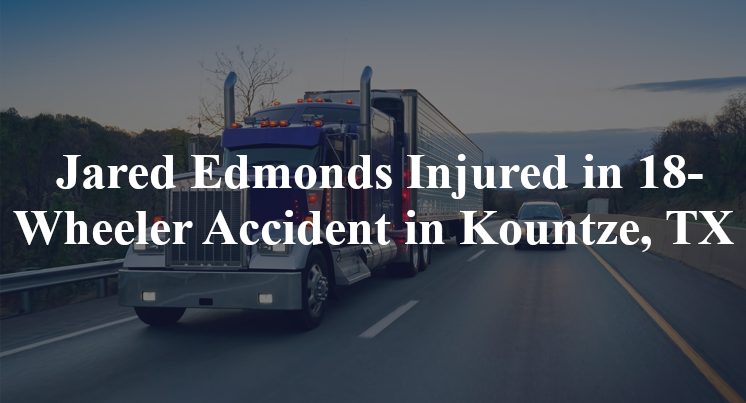
According to official statements, a pickup truck operated by Jared Edmonds was traveling on FM 418 when for unknown reasons the the vehicle crossed into oncoming traffic and collided with an 18-wheeler, causing the pickup to roll on its side.
When first responders arrived on scene they found that a good samaritan had pulled Edmonds from his vehicle, before he was then transported to the hospital in unknown condition. No further updates have been given by the authorities, though more may be released as the investigation continues.
Commentary by Attorney Michael Grossman
When a pickup crosses into oncoming traffic and collides with an 18-wheeler, the natural question is: Why did the vehicle drift over the center line? That’s the detail that makes all the difference—and right now, it hasn’t been explained.
From the outside, this might look like an open-and-shut case where the pickup driver is at fault. After all, he crossed the line. But after years of litigating commercial vehicle crashes, I’ve seen many cases where the surface facts don’t tell the full story. Without knowing why the vehicle crossed over, we can’t say whether this was driver error, a mechanical failure, or something more complicated.
What Could Cause a Driver to Drift?
When a vehicle crosses the center line, investigators should be asking: was the driver distracted? Was there a tire blowout or a steering issue? Did a medical emergency occur behind the wheel?
Each of those possibilities leads to different sources of evidence. Phone records can confirm or rule out distraction. A mechanical inspection may uncover failed components. Hospital records could reveal whether the driver had a seizure, heart issue, or other impairment that contributed to the crash. Any of these can shift how fault is assessed.
What Role Did the Truck Play?
The reports don’t say how the 18-wheeler responded, and that’s a major piece of the puzzle. Depending on the truck’s speed, position, and the driver’s actions, this could have been a no-win situation—or a preventable one.
The engine control module (ECM) in the 18-wheeler should show whether the driver hit the brakes, swerved, or maintained course. In past cases I’ve handled, that data turned out to be the difference between a driver doing everything possible and a driver who failed to act when seconds mattered.
When Help Complicates the Scene
We know that a good Samaritan pulled the driver from the pickup before emergency crews arrived. That’s a selfless act, but it also complicates the physical scene. In terms of legal investigation, any time a vehicle or its occupants are moved before documentation, it raises questions about occupant position, seatbelt use, and potential post-crash movement. Investigators will need to factor that in as they reconstruct what happened.
Key Takeaways
- Why the pickup crossed into oncoming traffic remains unknown, and multiple lines of inquiry should be pursued before fault is assigned.
- Phone records, medical data, and mechanical inspection are all crucial in determining the true cause.
- The truck’s ECM data may clarify whether evasive action was taken, and how quickly.
- Moving the driver before responders arrived alters the crash scene, and must be accounted for in reconstruction.
- Thorough investigation is the only way to reach a fact-based understanding of what really happened.
 call us
 Email Us
 Text us