

Jackson, MS — September 18, 2025, one person was killed in a dump truck accident at about 11:15 p.m. on northbound Interstate 220.
Authorities said a dump truck and an SUV were involved in a crash near Clinton Boulevard.
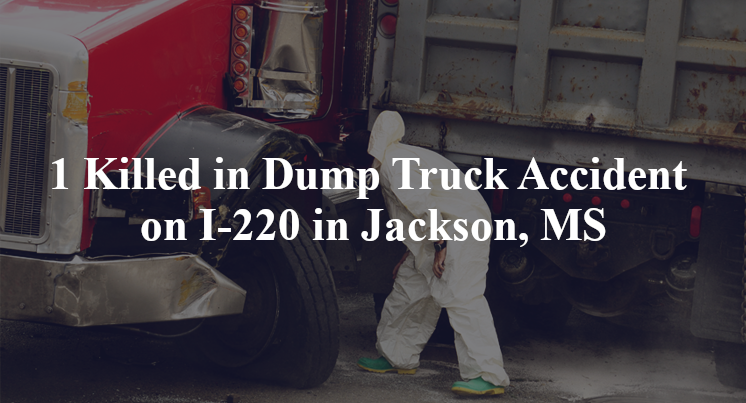
The driver of the SUV, whose name has not been made public yet, died at the scene of the crash, according to authorities.
No other injuries were reported.
Authorities have not released any additional information about the Hinds County crash at this time.
Commentary by Attorney Michael Grossman
When most people hear about a fatal crash involving a dump truck and an SUV, the first thought is usually: How did that even happen? And that’s exactly the right question to ask. At this point, there’s very little public information about what caused this collision on I-220. But that doesn’t mean we’re without a roadmap for how to find answers.
Was the dump truck moving or stopped at the time of impact? Depending on the answer, different questions arise. If it was moving, investigators need to look into how it was being operated. Was it speeding? Did the driver drift out of the lane? Was there a mechanical failure? If it was stopped or parked improperly, that raises a whole different set of issues about visibility, lighting and traffic flow.
One major concern I’ve seen in past cases is visibility at night. This crash happened at around 11:15 p.m., which raises the question of whether the dump truck was lit or reflective enough to be seen. I’ve handled cases where a commercial vehicle was legally stopped but lacked adequate lighting or conspicuity tape, and that turned what should’ve been a non-issue into a fatal hazard.
We also don’t yet know what role, if any, the SUV driver’s actions played in the collision. But that’s not something anyone can guess at responsibly. It takes real investigation — vehicle data, dash cam footage (if available), traffic camera video and eyewitness accounts — to figure that out.
And while dump trucks aren’t typically equipped with the same engine control modules or in-cab cameras that we see in long-haul 18-wheelers, many do carry GPS and maintenance logs that can still help piece together the picture. Things like brake condition, tire wear or even a faulty hydraulic system can all factor in.
In short, this is one of those cases where early reporting doesn’t scratch the surface. There are still unanswered questions about how the crash unfolded and what, if anything, could have been done to prevent it. And until those questions are answered through evidence, it’s too soon to draw conclusions about who’s at fault.
Key Takeaways:
- It’s not yet clear whether the dump truck was moving or stationary at the time of the crash, which significantly impacts how responsibility is assessed.
- Visibility is a major concern in nighttime crashes involving commercial vehicles: lighting and reflectivity must be carefully evaluated.
- Investigators should seek out vehicle data, maintenance logs and any available camera footage to understand what went wrong.
- Determining fault requires a full accounting of the facts, not speculation based on vehicle type or public assumptions.
 call us
 Email Us
 Text us