

Sallisaw, OK — April 23, 2025, an 11-year-old girl was killed and several other people were injured in a bus accident at about 8 p.m. at West Iola Avenue and South Walnut Street.
Authorities said an SUV and a church bus collided at the intersection.
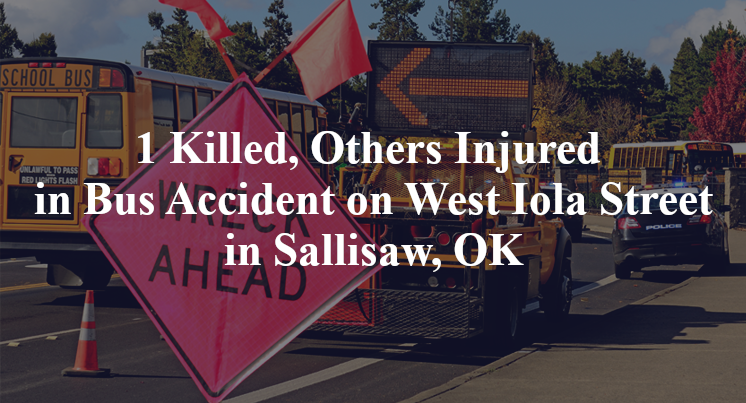
An 11-year-old girl on the bus died in the crash, according to authorities. She was a student at Sallisaw Middle School.
Several others who had been on the bus were hospitalized, authorities said. The bus driver suffered critical injuries, but authorities have not detailed the extent of the others’ injuries.
The people who were in the SUV were not thought to be injured, according to authorities.
Authorities have not released any additional information about the Sequoyah County crash at this time. The accident is still being investigated.
Commentary by Attorney Michael Grossman
When a crash between a church bus and an SUV results in the death of a child and injuries to multiple people, the investigation has to begin with a simple but vital question: who had the right-of-way, and did either driver do anything to contribute to the crash that could have been avoided? Intersections like West Iola Avenue and South Walnut Street demand a high level of attention from all drivers, but when one of those vehicles is a bus carrying passengers — especially children — the standard for caution is even higher.
Buses, whether used for schools or churches, are legally classified as common carriers. That means the law expects the driver to operate with a higher duty of care than a typical motorist. That includes obeying traffic signals, scanning for cross traffic and approaching every intersection as if the unexpected could happen. If the bus failed to yield, ran a stop sign or misjudged the speed or position of the SUV, those would be serious lapses, particularly given the cargo on board.
At the same time, investigators will need to examine the behavior of the SUV driver. Was it speeding? Did it have a clear path? Was it distracted or maneuvering recklessly? If the SUV entered the intersection improperly or failed to yield the right-of-way, then the burden may shift in that direction. These are details that require hard evidence — vehicle positions, impact points and statements from survivors — especially in a case where one driver is critically injured and unable to give their version of events.
The condition of the bus itself also warrants close scrutiny. Were the brakes functioning properly? Was the bus driver qualified and trained to handle this type of route at night? Did the church or organization responsible for the trip ensure that the vehicle was roadworthy and compliant with safety regulations? Too often, these crashes reveal gaps in oversight or maintenance that only come to light after the worst has already happened.
This crash isn’t just a traffic violation or a matter of two vehicles in the wrong place. It’s about whether those responsible for transporting children upheld their obligation to keep them safe, and whether the other party to the crash shared that same commitment. One child has already paid the highest price. The investigation now has to determine whether it was a tragic convergence of circumstances, or a preventable failure to operate with the care these situations demand. Because when a bus full of kids ends up at the center of a crash scene, the standard is never “was it legal?” The standard is “was it safe?” And that answer must be supported by facts, not assumptions.
 call us
 Email Us
 Text us