

Dallas, TX — July 27, 2024, Brindon Lau was injured due to a motorcycle versus car accident just after 9:15 p.m. along the Marvin D Love Freeway.
According to authorities, 21-year-old Brindon Lau was traveling on an eastbound Suzuki motorcycle on Wheatland Road at the U.S. 67 northbound service road intersection when the accident took place.
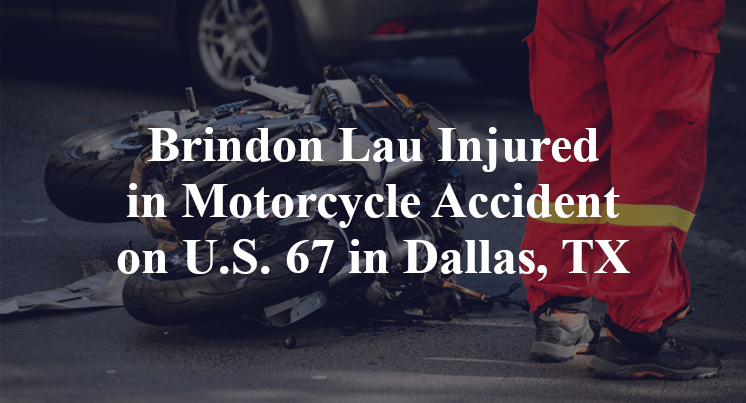
The intersection is controlled by a signal light. Officials indicate that, for as yet unknown reasons, as the motorcycle attempted a left turn onto the service road, a collision occurred between the Suzuki and a westbound Ford Explorer. Following that, a Kawasaki motorcycle occupied by a 21-year-old man took faulty evasive action and also struck the Ford. It is unclear which vehicle had the right of way at the time of the wreck due to conflicting statements.
Lau reportedly sustained serious injuries over the course of the accident. The other motorcyclist suffered minor injuries, as well, according to reports. Additional details pertaining to this incident are not available at this point in time.
Commentary by Attorney Michael Grossman
When multiple vehicles collide in an intersection—especially involving motorcycles—it’s often unclear who had the right of way. Conflicting statements and quick assumptions can cloud the facts. But in situations like this, clarity only comes when someone takes the time to dig beyond what’s immediately visible.
Did the authorities thoroughly investigate the crash?
Any crash involving turning vehicles and conflicting accounts at a signalized intersection demands careful reconstruction. That means more than just noting damage and taking statements. Investigators should have analyzed light cycle timing, skid marks, vehicle paths, and potential line-of-sight issues to determine how each party entered the intersection. When motorcyclists are involved—particularly in multi-vehicle scenarios—timing and trajectory become critical. If those details weren’t mapped and measured, the investigation may have left key questions unresolved.
Has anyone looked into the possibility that a vehicle defect caused the crash?
With two motorcycles and an SUV involved, it’s important to consider whether mechanical or electronic failure played a role—especially in the initial impact. Did the Suzuki respond correctly to the rider’s inputs? Did the Ford Explorer’s systems perform as expected under braking or during a swerve? If either vehicle experienced a failure in steering, braking, or advanced safety features, that could have contributed to the crash. Without a mechanical inspection, those questions stay unanswered.
Has all the electronic data relating to the crash been collected?
The Ford Explorer likely has a wealth of electronic data: braking patterns, throttle input, steering angles, and even forward-collision system activity. That data could confirm whether the driver attempted to stop or swerve, and whether those actions aligned with the traffic signal phase. Phone GPS data or dash cams from any of the vehicles might also help clarify the timing and movement through the intersection. If that information wasn’t retrieved, there’s a good chance the narrative is being built on partial information.
Serious crashes at intersections, especially when motorcycles are involved, deserve more than a glance and a guess. The key to understanding what really happened lies in the details—if someone takes the time to find them.
Takeaways:
- Conflicting right-of-way claims at signalized intersections demand full crash reconstruction.
- Mechanical or electronic failures could alter how a vehicle responds and must be ruled out.
- Digital vehicle data and phone or camera footage are critical to clarifying events.
 call us
 Email Us
 Text us