

Mount Vernon, MO — August 15, 2025, One person was killed following an 18-wheeler accident that occurred at around 5:22 A.M. on Interstate 44.
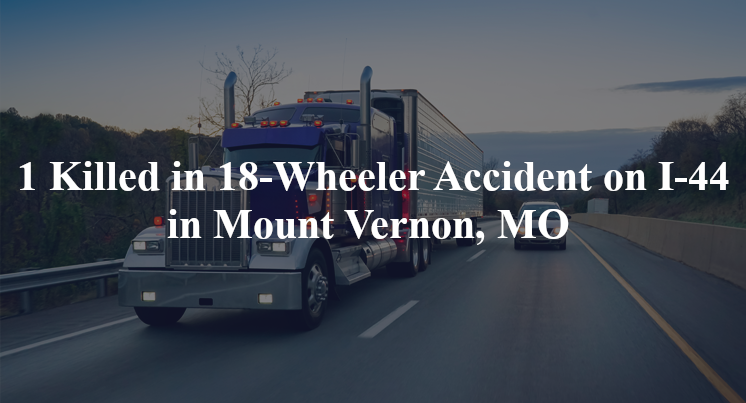
According to reports, a 49-year-old man was outside of his Toyota Rav-4 in the eastbound lanes of Interstate 44 due to a previous crash, when he and his vehicle were struck by an 18-wheeler.
When first responders arrived they found that the semi and Toyota had left the roadway after impact, and that the Toyota’s driver was fatally injured and was pronounced deceased. At this time officials have not released the identity of the deceased, or provided an update on the investigation’s status.
Commentary by Attorney Michael Grossman
When people hear about a crash where a person was outside their vehicle on the highway and struck by an 18-wheeler, the natural question is: why didn’t the truck driver see and avoid them? That question, however, isn’t as straightforward as it may seem, and the answers usually depend on evidence that hasn’t yet been made public.
From reports, we know the man was already stopped in the eastbound lanes after a prior crash, and both he and his vehicle were in the roadway when the 18-wheeler struck them. What’s not clear is whether the truck driver had time to see the hazard, whether other vehicles were stopped nearby, or how much space and lighting conditions affected visibility. Depending on those factors, the questions about responsibility can look very different.
Investigators will want to review several kinds of evidence. The truck’s engine control module (ECM) can show whether the driver braked or tried to swerve. Dash cameras or in-cab video—if the truck was equipped—could reveal how visible the stopped vehicle and pedestrian were in real time. Cell phone records could confirm whether distraction was a factor. Authorities may also look at the placement of hazard lights, road flares, or any other signals that might have alerted oncoming traffic.
Another important consideration is whether the trucking company properly trained and monitored its driver. Even highly experienced truckers can find themselves in difficult situations at highway speeds, but companies have a duty to ensure their drivers are prepared to recognize and respond to hazards.
At this stage, we don’t know whether the key issue here was visibility, reaction time, distraction, or some other factor. What we do know is that a person and his vehicle were in the travel lanes, and an 18-wheeler collided with them. Only a careful investigation can sort out whether that collision was avoidable, and if so, who bears responsibility.
Key Takeaways:
- It’s unclear whether the truck driver had enough time or visibility to avoid the stopped vehicle and person in the roadway.
- Crucial evidence includes ECM data, dash/in-cab cameras, phone records, and whether hazard signals were in place.
- Investigators must determine if distraction, speed, or inadequate training contributed to the collision.
- The fact that both the Toyota and semi left the roadway suggests a violent impact, but the root cause remains undetermined.
- Accountability depends on a full review of physical evidence and company practices, not assumptions.
 call us
 Email Us
 Text us