
Piketon, OH — April 17, 2025, Leona Pertuset was killed and James Pertuset and Annette Peck were injured in a truck accident at about 4:10 p.m. on State Route 32.
Authorities said an eastbound 2007 Peterbilt semi-truck hit a 2017 Cadillac CTS that was headed north on the ramp from U.S. Route 23. The collision spun the smaller vehicle into a 2011 Kia Sorrento that was waiting to turn onto U.S. 23.
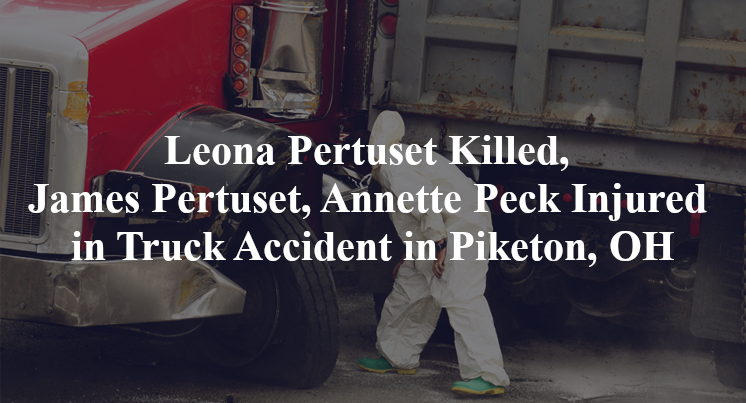
Three people were hospitalized after the crash, including Cadillac passenger Leona Pertuset, 95, who died April 21 from her injuries, according to authorities.
Cadillac driver James Pertuset, 93, and Kia driver Annette Peck, 63, were hurt as well, but authorities did not specify the severity of their injuries.
The driver of the truck was not injured, authorities said.
Authorities have not released any additional information about the Pike County crash.
Commentary by Attorney Michael Grossman
When a semi-truck collides with a vehicle entering from an on-ramp, as happened here at the intersection of State Route 32 and U.S. Route 23, the investigation has to center on right-of-way, timing and whether the truck driver was traveling in a manner consistent with their elevated responsibilities under the law. These are not situations where the truck driver is simply another vehicle in traffic. They’re professional operators handling tens of thousands of pounds at highway speeds, and that carries serious legal weight when something goes wrong.
The key legal question here is whether the Cadillac entering from the ramp had merged improperly or whether the truck driver failed to yield or slow in response to a vehicle entering the highway. Merging lanes and intersections like this are well known for their complexity and risk. For that reason, truck drivers are trained to anticipate merging vehicles, adjust speed early and change lanes or provide space when safe to do so. If the truck was traveling too fast for conditions or failed to yield to a vehicle lawfully entering the roadway, that could point to negligence.
At the same time, investigators will need to determine whether the Cadillac entered the lane too slowly or without sufficient room, forcing the truck driver into a situation they couldn’t reasonably avoid. These types of interactions often come down to seconds of decision-making: was there enough time and distance for either vehicle to adjust? Was visibility limited by the ramp design, or did the road layout contribute to the confusion?
The fact that the impact spun the Cadillac into a third vehicle waiting to turn only adds to the seriousness of the crash and raises further questions about the force of the collision and the truck’s speed at the time of impact. If the semi struck the Cadillac with enough force to push it into another vehicle, that suggests the truck may not have slowed at all or was unable to, which brings up additional concerns about following distance and whether the driver anticipated the hazard in time.
This crash isn’t just about a failure to yield or a simple traffic mistake. A woman lost her life, and two others were hospitalized, because a commercial truck and a merging vehicle met at exactly the wrong time. The investigation needs to find out not just who entered whose path, but whether either driver could have done more to avoid a collision. And for the truck driver in particular, the standard is higher, because when you’re operating the largest and most dangerous vehicle on the road, the law expects more than just reacting. It expects you to see these situations coming and to act before the moment of no return.

 call us
  Email Us
  Text us