
Baton Rouge, LA — February 23, 2025, William Gray was killed due to a truck accident at some point in the morning along Interstate Highway 10.
According to authorities, 19-year-old William Gray was traveling in a passenger vehicle on I.H. 10 when, for as yet unknown reasons, it was involved in a collision with the rear-end of an 18-wheeler, becoming stuck.
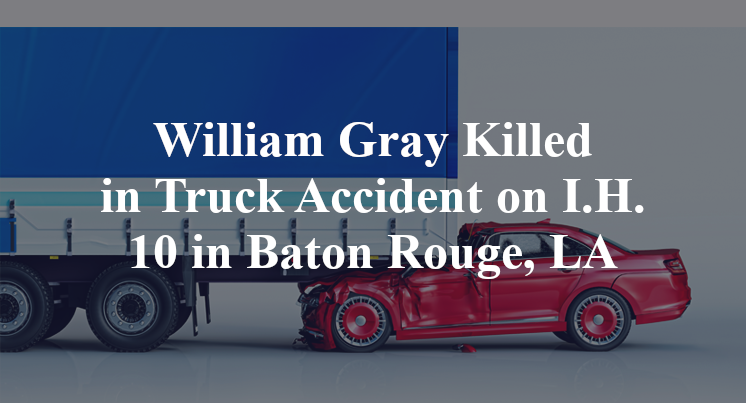
The truck apparently did not stop when the collision occurred, allegedly dragging the passenger vehicle along behind it for close to a mile before an occupant in a separate vehicle brought the situation to the truck driver’s attention. Gray suffered reportedly fatal injuries due to the collision. Additional details pertaining to this incident are not available at this point in time. The investigation is currently ongoing.
Commentary by Attorney Michael Grossman
When a passenger vehicle collides with the back of an 18-wheeler and becomes lodged underneath it, the key question isn’t just what happened, but why it happened. In my experience handling truck accident cases, crashes like this rarely occur without multiple contributing factors that need to be examined.
Why didn’t the truck driver realize the collision had occurred? A fully loaded semi-truck can weigh up to 80,000 pounds, making it difficult to feel the impact of a smaller vehicle, but it’s highly concerning that the truck reportedly dragged the car for nearly a mile before stopping. Investigators should review dashcam footage, driver records, and vehicle positioning to determine whether the truck driver was distracted, fatigued, or otherwise unaware of the collision.
Was the truck properly equipped with an underride guard? Federal regulations require trucks to have rear underride guards designed to prevent smaller vehicles from becoming stuck beneath the trailer. If the guard was missing, defective, or improperly installed, that could have contributed to the severity of the crash. Investigators should conduct a post-crash inspection to determine whether the truck’s safety equipment was compliant with regulations.
Did the truck’s visibility or stopping distance play a role? If the truck was moving significantly slower than surrounding traffic, merging onto the highway, or stopping suddenly, that could have left the passenger vehicle’s driver with little time to react. Investigators should analyze speed data, braking patterns, and lighting conditions at the time of the crash.
Did broader issues contribute to the wreck? Trucking companies are responsible for ensuring their drivers are properly trained and their vehicles are in safe operating condition. If a company ignored safety regulations, failed to properly maintain its fleet, or pressured drivers to meet unrealistic schedules, those factors could be relevant in understanding why this crash happened. Investigators should review company policies, maintenance records, and any past safety violations to determine whether broader issues played a role.
At the end of the day, the most important thing is finding answers. Even if it takes an independent investigation to gather the right evidence, it’s critical to examine every factor to ensure those affected by the crash get the clarity and closure they deserve.

 call us
  Email Us
  Text us